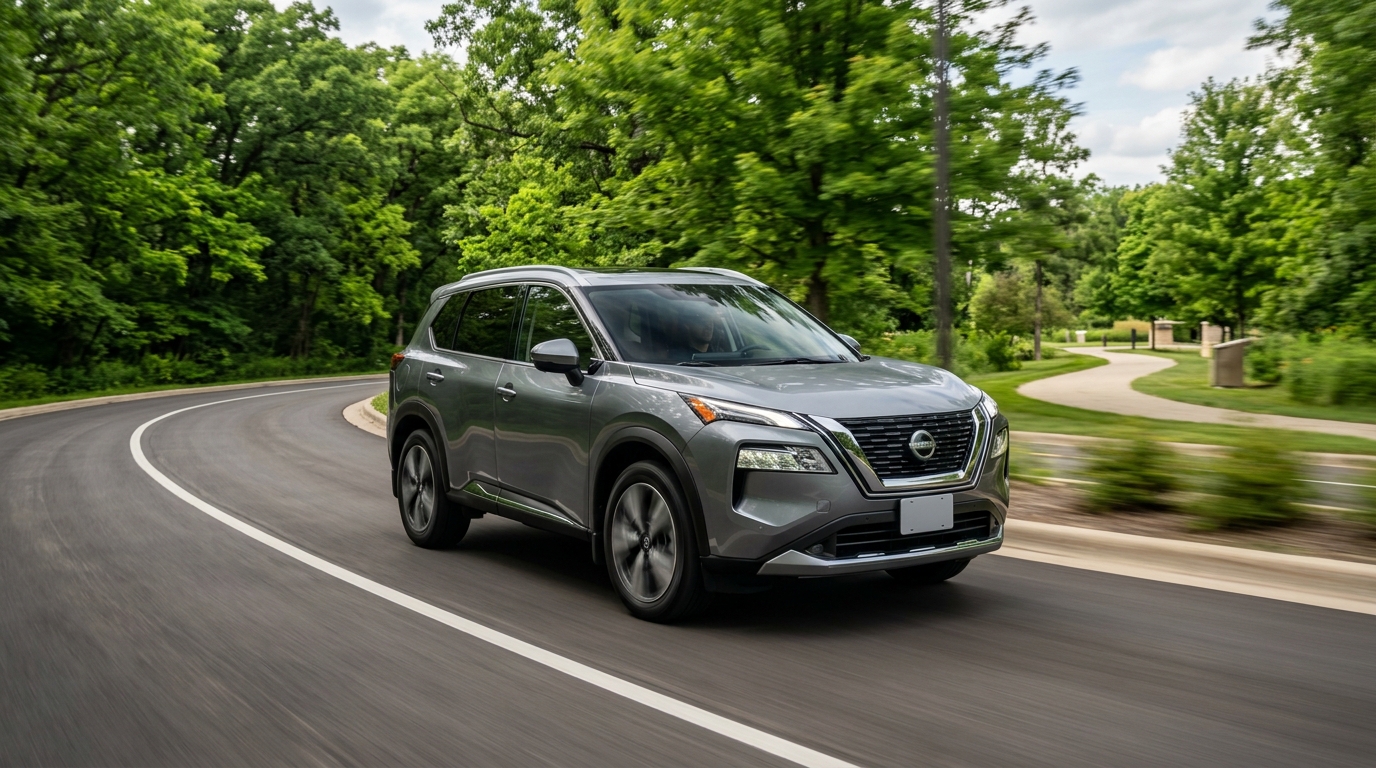
Properly maintaining a 2024 Nissan VC-Turbo engine requires strict adherence to recommended 5,000-mile or 6-month synthetic oil change intervals using the manufacturer-specified viscosity grade, prompt replacement of OEM engine air filters, and consistent use of high-quality fuel. Because variable compression components rely on precise hydraulic oil pressure to actuate the internal multi-link mechanism, maintaining clean motor oil prevents varnish accumulation on the control arm linkage, harmonic drive actuator, and turbocharger bearings.
The engineering behind Nissan's variable compression turbocharged engines represents a significant leap in internal combustion design. Models like the 2024 Nissan Rogue Platinum equipped with the 1.5L VC-Turbo three-cylinder engine and the 2024 Nissan Altima SR featuring the 2.0L VC-Turbo four-cylinder engine utilize high-tech actuators to adjust piston stroke geometry continuously while driving. Routine maintenance keeps these intricate components operating smoothly:
- Synthetic Motor Oil Changes: Replacing engine oil every 5,000 miles ensures proper oil pressure to the multi-link actuator and prevents thermal breakdown inside the turbocharger center housing.
- OEM Engine Air Filter Service: Inspecting the air filter every 10,000 miles keeps debris out of the compressor wheel and intake manifold, preserving optimal air-fuel ratios.
- Spark Plug and Direct Injection Care: Inspecting iridium spark plugs and using top-tier fuel additives prevents carbon buildup on intake valves and direct injectors, maintaining crisp throttle response.
- Cooling System Flushing: Maintaining clean engine coolant at prescribed intervals protects the intercooler and engine block from thermal stress during high-boost driving.
When commuting along the Des Plaines River corridor or navigating daily highway traffic around Chicago, keeping up with factory maintenance schedules ensures long-term powertrain durability. Drivers seeking expert guidance can review our selection of efficient Nissan vehicles or give our service department a quick call to clarify service intervals. For in-person care, visit our service center location to speak with factory-trained technicians.
Table of Contents
- How Does the VC-Turbo Mechanism Physically Change Compression Ratios While Driving?
- How Does Eco Mode and Supporting Engine Tech Optimize Fuel Efficiency?
How Does the VC-Turbo Mechanism Physically Change Compression Ratios While Driving?
The VC-Turbo mechanism physically changes compression ratios by using an electric harmonic drive motor connected to a control arm, which rotates a lower link on the engine crankshaft to adjust the piston's top-dead-center position in fractions of a second. Under light throttle conditions, the actuator raises the piston height to achieve a high 14:1 compression ratio for maximum thermal efficiency and fuel economy, while heavy acceleration lowers the piston position to an 8:1 ratio to allow higher turbocharger boost pressure without engine knock.
Traditional internal combustion engines operate with a fixed compression ratio determined by the mechanical dimensions of the crankshaft, connecting rods, and pistons. Nissan engineers solved a century-old engineering puzzle by replacing fixed connecting rods with a patented multi-link structure. A sensor network continuously monitors engine speed, throttle pedal position, manifold pressure, and gear selection, sending real-time signals to the harmonic drive control motor.
When cruising at constant speeds, the control motor rotates an eccentric control shaft that shifts the lower link assembly. This subtle shift alters the stroke geometry of each piston, raising its highest point inside the cylinder without altering cylinder bore dimensions. Running at a 14:1 compression ratio squeezes every drop of energy from the air-fuel mixture, drastically lowering fuel consumption during highway cruising.
Conversely, when merged onto fast-moving traffic lanes, sudden accelerator pedal input triggers the harmonic drive motor to rotate the control arm in the opposite direction. Within milliseconds, the multi-link system lowers the piston height, dropping compression to 8:1. This lower compression ratio creates ideal cylinder conditions for the turbocharger to force pressurized air into the combustion chamber, delivering immediate torque and rapid acceleration. For complete technical specs or engine diagnostic inquiries, feel free to visit our main website or contact our service advisors directly.
How Does Eco Mode and Supporting Engine Tech Optimize Fuel Efficiency?
Eco mode optimizes fuel efficiency on VC-Turbo vehicles by recalibrating accelerator pedal sensitivity to smooth out driver inputs, commanding the harmonic drive motor to hold higher compression ratios longer, and optimizing climate control compressor load. Combined with complementary engine technologies such as dual fuel injection and continuous variable valve timing, the system reduces pumping losses and achieves an EPA-rated 28 city / 34 hwy mpg on all-wheel-drive models like the 2024 Nissan Rogue Platinum and up to 29 city / 36 hwy mpg on front-wheel-drive configurations.
In addition to variable compression mechanics, Nissan integrates multiple advanced fuel-saving technologies directly into the engine architecture:
- Dual Fuel Injection System: Combines direct cylinder injection with port fuel injection. Port injection delivers sub-micron fuel droplets during light loads to enhance atomization, while direct injection cools the combustion chamber under heavy load for greater power output.
- Exhaust Continuous Variable Valve Timing (C-VTC): Adjusts exhaust valve opening and closing timing dynamically, working alongside intake-side valve control to eliminate pumping resistance and improve exhaust gas recirculation efficiency.
- Integrated Exhaust Manifold: Cast directly into the aluminum cylinder head, this design allows engine coolant to absorb heat from exhaust gases faster, bringing the engine to optimal operating temperature rapidly to minimize cold-start fuel burn.
- Mirror-Bore Cylinder Coating: Plasma-sprayed cylinder walls reduce internal friction between piston rings and sleeve walls while shedding significant weight compared to heavy cast-iron cylinder liners.
During stop-and-go driving along commercial corridors like Irving Park Road, engaging Eco mode helps drivers maintain smooth acceleration patterns that prevent the engine from dropping unnecessarily into low-compression, high-boost modes. Owners interested in verifying real-world efficiency outcomes can read real customer feedback regarding their experiences with the VC-Turbo engine's performance and fuel economy.