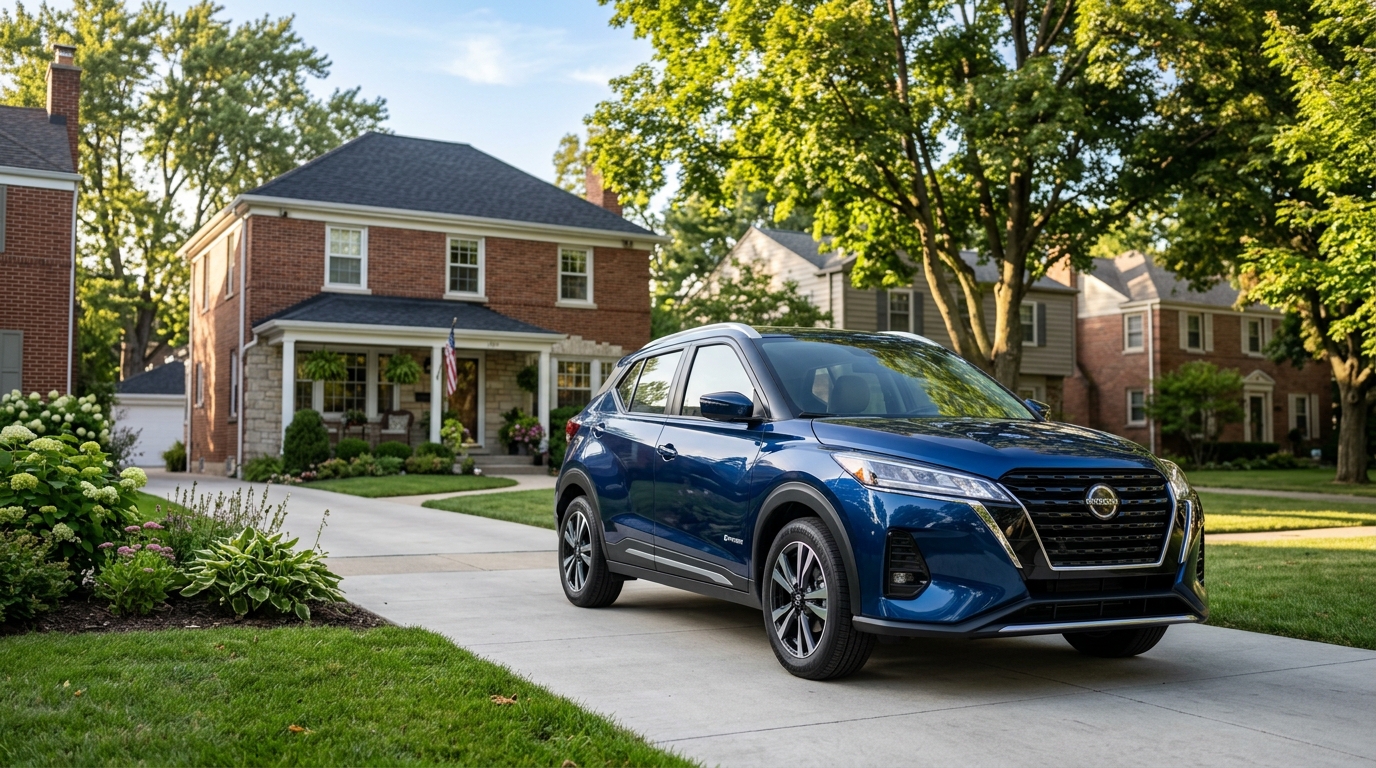
The recommended maintenance schedule for the 2027 Nissan Kicks requires synthetic engine oil and filter changes every 5,000 to 7,500 miles or 6 months, tire rotations every 7,500 miles, cabin air filter replacement every 15,000 miles, brake fluid flushes every 30,000 miles, and Xtronic CVT fluid inspections every 30,000 miles. Following these factory intervals keeps your crossover running smoothly and maintains long-term reliability.
Adhering to a structured maintenance routine ensures every mechanical system on the 2027 Nissan Kicks operates at peak efficiency. Based on recent model years, the 2027 Nissan Kicks is anticipated to utilize a high-efficiency powertrain that relies on precise fluid care and routine inspections. Service appointments are structured around mileage milestones to catch wear before it impacts performance:
- 5,000 to 7,500 Miles (or 6 Months): Replace engine oil and filter, inspect brake pads and rotors, check tire pressure and tread depth, inspect wiper blades, and top off washer fluid.
- 15,000 Miles (or 12 Months): Rotate tires, replace the in-cabin microfilter, inspect drive shafts, steering gear, linkage, and axle suspension components.
- 30,000 Miles (or 24 Months): Replace the engine air filter, replace brake fluid, inspect exhaust system, fuel lines, and perform a comprehensive scan of the Xtronic CVT transmission fluid condition.
- 60,000 Miles (or 48 Months): Perform full multi-point vehicle inspection, check engine drive belts, evaluate spark plug wear, and inspect all cooling system hoses and connections.
Living in a salt-belt climate adds extra demands on key vehicle components. Prolonged sub-freezing temperatures and heavy road-salt exposure during local winters make regular undercarriage inspections and brake services essential. Drivers bringing their vehicle into our bays often ask how winter road salt impacts underbody lines; routine multi-point checks allow our factory-trained technicians to clean chassis contact points and apply protective measures to prevent premature surface corrosion.
To keep your crossover running like new, book your next service appointment with our expert technicians at Berman Nissan of Chicago. You can easily find our convenient Kedzie Avenue service center location or give our service desk a quick call at (872) 278-7632 to confirm your appointment details.
Table of Contents
- What Engine and Powertrain Specifications Drive the Nissan Kicks Maintenance Needs?
- What Additional Feature Upgrades Come on the Nissan Kicks SV Trim Compared to the Base S?
- Does the Nissan Kicks Feature Automatic Emergency Braking with Pedestrian Detection?
- How Do the Exterior Dimensions and Cargo Space Compare Between the Kicks and Rogue?
- How Does the Nissan Kicks Handle Chicago Roads and Harsh Winter Driving?
- Common Questions About Nissan Kicks Maintenance and Care
What Engine and Powertrain Specifications Drive the Nissan Kicks Maintenance Needs?
The 2027 Nissan Kicks is anticipated to feature a 2.0-liter four-cylinder engine producing 141 hp and 140 lb-ft of torque, paired with an Xtronic CVT automatic transmission. This naturally aspirated engine avoids the high thermal stresses of turbocharging, resulting in straightforward maintenance focused on regular oil changes, drive belt checks, and continuous transmission monitoring.
Understanding how this powertrain functions helps owners appreciate its service requirements. The 2.0-liter four-cylinder engine uses precision fuel injection and dual overhead camshafts designed for durable daily operation. Keeping the engine oil clean is vital because clean oil lubricates internal camshaft actuators and maintains optimal hydraulic pressure across the valve train.
The Xtronic CVT requires specialized care to deliver smooth, stepless acceleration. Continuous variable transmissions rely on a high-tension steel belt moving across variable pulleys. Over time, heat cycling breaks down the friction modifiers in the transmission fluid. Regular inspections at 30,000-mile increments ensure the fluid retains its protective viscosity, protecting internal steel bands from wear.
For models equipped with available Intelligent All-Wheel Drive, the maintenance routine expands to include rear differential and transfer case fluid checks. While front-wheel-drive models focus maintenance strictly on the front transaxle, all-wheel-drive variants require fluid monitoring at both axles to ensure instant power transfer when slippery conditions occur. You can explore our highlight models to see how different powertrain configurations match your daily driving demands.
What Additional Feature Upgrades Come on the Nissan Kicks SV Trim Compared to the Base S?
Upgrading from the base S to the SV trim on the Nissan Kicks adds 17-inch machine-finished aluminum-alloy wheels, silver roof rails, a wireless smartphone charger, Automatic Temperature Control, and remote engine start while expanding comfort features beyond the standard 12.3-inch touchscreen. From a maintenance viewpoint, the SV trim introduces advanced electronic modules and aluminum wheels that require specific care routines.
While both trims feature impressive digital displays, the expanded feature set on the SV creates distinct service consideration areas:
- 17-Inch Alloy Wheels: Unlike steel wheels with plastic covers, aluminum-alloy wheels require precise lug nut torque verification during tire rotations to prevent wheel hub distortion and ensure even rotor alignment.
- Automatic Temperature Control: The SV climate system uses interior temperature sensors and automated blend doors that benefit from periodic cabin filter replacements to prevent dust buildup on evaporator coils.
- Wireless Charging Pad & Electronics: Integrated wireless charging modules draw from the 12-volt battery system, making regular battery terminal cleaning and conductance testing essential during routine service.
- Silver Roof Rails: Exterior trim pieces require periodic inspection to ensure mounting seals remain tight, preventing moisture intrusion around roof anchor points.
Technicians servicing the SV trim connect diagnostic scanning tools to evaluate both the infotainment software and climate control sensors. Ensuring these electronic convenience systems receive regular voltage checks keeps all cabin tech functioning seamlessly year after year.
Does the Nissan Kicks Feature Automatic Emergency Braking with Pedestrian Detection?
Yes, Automatic Emergency Braking with Pedestrian Detection is standard equipment across all Nissan Kicks trims as a core component of the standard Nissan Safety Shield 360 driver-assist suite. Keeping this active safety system functional requires maintaining clean windshield sensor zones and clear front bumper radar housings.
The Nissan Safety Shield 360 package combines six advanced safety technologies designed to monitor surroundings constantly:
- Automatic Emergency Braking with Pedestrian Detection
- Rear Automatic Braking
- Blind Spot Warning
- Rear Cross Traffic Alert
- Lane Departure Warning
- High Beam Assist
Proper maintenance of these driver-assist systems relies heavily on keeping external camera lenses and radar modules free from dirt, ice, and road salt. The forward-facing camera mounted behind the upper windshield relies on a clean glass surface to process visual data accurately. If you ever need to replace your windshield due to stone chips or cracks, the camera must be precisely recalibrated using specialized optical target tools in our service bay to ensure lane markings and pedestrian boundaries remain accurately mapped.
Similarly, radar units behind the front bumper require correct alignment. Minor parking bumps or front-end fascia impacts can shift radar angles slightly, triggering system warning lights. Certified technicians use diagnostic software to verify target aiming angles, ensuring your safety features respond instantly when hazard warnings are triggered.
How Do the Exterior Dimensions and Cargo Space Compare Between the Kicks and Rogue?
The subcompact Nissan Kicks measures 171.9 inches in total length with up to about 30 cubic feet of cargo volume behind the second row, whereas the larger Nissan Rogue spans 183.0 inches with up to about 37 cubic feet of rear cargo space. For owners, the smaller exterior footprint of the Kicks simplifies maneuvering into tight parking spaces while requiring less surface area for paint maintenance and body care.
Comparing the physical dimensions helps illustrate how maintenance tasks scale between the two crossover sizes:
- Overall Length: The Kicks measures 171.9 inches compared to the Rogue at 183.0 inches, making the Kicks significantly easier to wash, detail, and fit inside compact urban garages.
- Maximum Cargo Capacity: The Kicks offers up to about 60 cubic feet of total cargo volume with the rear seats folded, while the Rogue offers up to about 74 cubic feet.
- Rear Seat Cargo Space: Front-wheel-drive Kicks models feature up to about 30 cubic feet of rear storage space (about 24 cubic feet on AWD models), incorporating an adjustable-height cargo floor on SV and SR trims.
- Suspension Load Care: Because the Kicks has a lighter overall curb weight, maintaining correct shock absorber performance and coil spring tension involves staying within recommended gross vehicle weight limits during heavy cargo hauls.
The adjustable cargo floor mechanism in the Kicks uses guide tracks that should be kept free of grit and debris. Vacuuming floor channels during routine cabin cleanings prevents binding, ensuring smooth transitions between flat loading floors and deep cargo wells.
How Does the Nissan Kicks Handle Chicago Roads and Harsh Winter Driving?
Featuring 8.4 inches of standard ground clearance and available Intelligent All-Wheel Drive with a dedicated Snow mode, the Nissan Kicks navigates deep snow drifts, rutted alleyways, and spring potholes with steady confidence. Proper winter care involves seasonal tire inspections, underbody salt rinses, and testing battery cold-cranking amps before winter weather arrives.
Navigating uneven pavement around Irving Park during seasonal freeze-thaw cycles subjects lower control arm bushings, strut mounts, and sway bar links to continuous impact forces. The generous 8.4 inches of standard ground clearance prevents undercarriage scraping over packed snow banks, but exposed steering and suspension joints still require annual inspection for boot tears or seal damage.
When equipped with Intelligent All-Wheel Drive, the system actively monitors wheel slip and adjusts power transfer to the rear wheels in milliseconds. Selecting Snow mode alters throttle response and transmission ratios to reduce wheel spin on slick surfaces. To maintain peak traction during local commutes, drivers should routinely check tire tread depth, as cold weather lowers tire pressure by approximately one pound per square inch for every ten-degree drop in outside temperature.
Regular undercarriage washes during winter prevent road salt from gathering in suspension pockets and brake assemblies. Rinsing exposed metal surfaces removes corrosive calcium chloride compounds, preserving rotor surfaces, brake lines, and exhaust heat shields throughout the severe winter season.
Common Questions About Nissan Kicks Maintenance and Care
Q: How often should I change the engine oil in my Nissan Kicks?
Engine oil and filter replacements are recommended every 5,000 to 7,500 miles or 6 months using full synthetic oil. Regular oil changes protect internal components of the 2.0-liter four-cylinder engine against friction, thermal breakdown, and sludge accumulation, ensuring reliable daily operation across all driving conditions.
Q: Does the Xtronic CVT require regular fluid service?
Nissan recommends inspecting the Xtronic CVT fluid every 30,000 miles. Depending on driving habits—such as frequent stop-and-go city travel—factory-trained technicians evaluate fluid clarity and degradation using diagnostic tools, replacing the fluid when necessary to preserve smooth gear-ratio transitions and internal cooling efficiency.
Q: What is involved in calibrating Nissan Safety Shield 360 sensors?
Calibration aligns the optical camera and radar sensors that power Automatic Emergency Braking with Pedestrian Detection and Lane Departure Warning. If your windshield is replaced or the front bumper experiences impact, technicians set up specialized alignment targets to ensure sensor aiming angles match factory specifications precisely.
Q: Why is underbody washing essential during local winters?
Road salt and liquid de-icers used on frozen streets accelerate metal oxidation on exhaust pipes, suspension control arms, and brake assemblies. Rinsing the underbody regularly removes salt deposits, protecting chassis components from premature corrosion and helping maintain factory warranty coverage over time.
Q: How do I schedule factory-recommended maintenance for my Nissan Kicks?
You can easily schedule routine maintenance or multi-point inspections online or by reaching out to our service team directly. Contact our service advisors by phone at (872) 278-7632 or visit our Kedzie Avenue service department to keep your crossover running at its best.