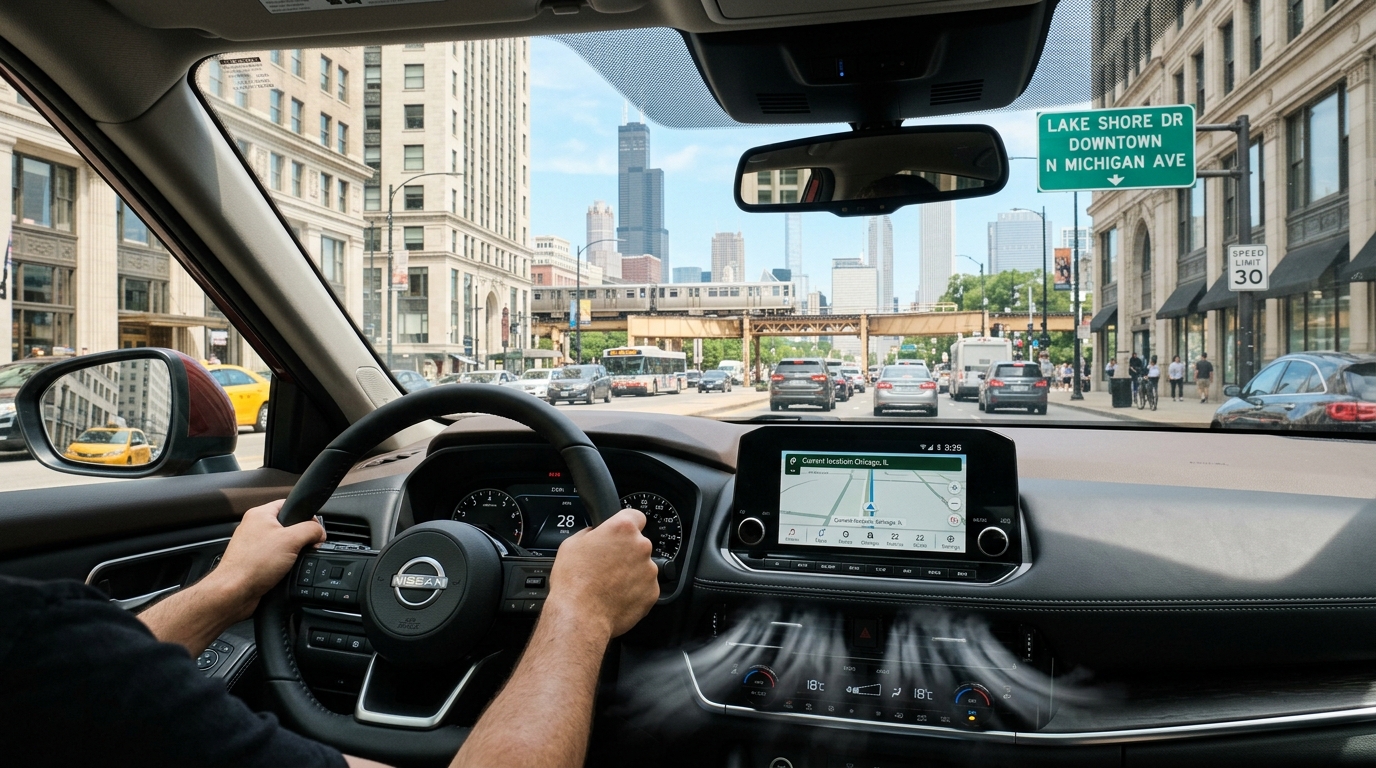
Summer temperatures in the Midwest regularly climb into the high eighties and nineties, placing extreme stress on your vehicle's cooling system. When you are stuck in gridlock on the highway, a failing air conditioning system quickly turns a routine drive into an exhausting ordeal. The stop-and-go pattern of a typical Chicago commute means the engine spends significant time idling, which reduces the natural airflow across the condenser and forces the AC compressor to work much harder to keep the cabin cool.
Regular system checks prevent sudden failures before the hottest days arrive. If you notice your vents blowing lukewarm air when stopped, it is a key indicator that your system requires professional attention. Larger family vehicles require a fully pressurized system to distribute cool air to all three rows of seats. To find our service center and have your system evaluated, you can get directions to our Kedzie Avenue location. If you need to speak with a service advisor immediately, give our team a quick call at (872) 278-7632. Understanding how different vehicles handle climate demands can help you choose your next ride; you can also explore the best Nissan models for local driving conditions.
Table of Contents
- How Nissan Dual-Zone and Intelligent Climate Control Systems Maintain Cabin Comfort
- Signs of a Clogged Cabin Air Filter and Troubleshooting Weak Airflow
- How Technicians Diagnose Refrigerant Leaks and Failing AC Compressors
- How to Document Your Nissan Climate Control Symptoms Before Service
- Answers to Common Nissan Air Conditioning Questions
- Expert Climate Control Service and Diagnostics at Our Service Center
How Nissan Dual-Zone and Intelligent Climate Control Systems Maintain Cabin Comfort
Modern vehicles rely on sophisticated sensor networks to manage interior comfort automatically. Nissan's Intelligent Climate Control system utilizes interior cabin temperature sensors, ambient external sensors, and a dashboard-mounted solar sensor to regulate fan speed, air distribution, and temperature settings without manual adjustment. On equipped trims of the Nissan Rogue, such as the Platinum trim, Tri-Zone Automatic Temperature Control is standard, allowing rear passengers to manage their own dedicated climate zone.
We also see Remote Engine Start with Intelligent Climate Control on many modern SUVs. This feature allows drivers to pre-cool the cabin remotely. The system automatically initiates the air conditioning to lower interior temperatures before you open the door. For electric vehicles like the Nissan Ariya, the NissanConnect app allows remote pre-conditioning, drawing power directly from the charger to preserve battery range. You can learn more about our dealership's service offerings by visiting our homepage. Our team takes pride in supporting local drivers, which you can see by reading about our community involvement.
Signs of a Clogged Cabin Air Filter and Troubleshooting Weak Airflow
Weak airflow from your dashboard vents is often the first sign that your climate control system is struggling. The most common culprit is a dirty cabin air filter, which captures pollen, dust, and outdoor debris before it enters the passenger compartment. In urban neighborhoods like Irving Park, where city dust and stop-and-go emissions are highly concentrated, these filters can become clogged much faster than the standard service interval suggests.
Symptoms of a clogged filter include a musty odor, increased fan noise, and a noticeable drop in cooling performance. If you replace the filter and still experience weak airflow, the issue likely resides deeper in the HVAC assembly. Technicians will inspect the blower motor and the blower motor resistor, which controls fan speeds. Additionally, a malfunctioning blend door actuator can prevent the climate system from routing air correctly, leaving you with weak or warm airflow despite a clean filter. Our certified technicians have resolved countless airflow issues, as you can see when you read our customer reviews online. If your vents are blowing weak or dusty air, contact our team today to schedule an inspection.
How Technicians Diagnose Refrigerant Leaks and Failing AC Compressors
Pinpointing a loss of cooling power requires specialized diagnostic tools and training. When a climate system loses its charge, a refrigerant leak is the primary suspect. Technicians diagnose these leaks by introducing a specialized ultraviolet dye into the system, running the air conditioning, and scanning the lines, fittings, and the condenser with a blacklight to locate the glowing leak site.
A failing AC compressor is another common issue. If you hear a loud squealing or grinding noise when turning on the AC, the compressor bearings or the compressor clutch may be failing. If the clutch seizes completely, it can damage the serpentine belt, which can disable your alternator and stall the engine. For those driving a Nissan Pathfinder, replacing a failed compressor is a major service. Industry data indicates that the labor costs to replace an AC compressor on a Pathfinder typically range from $210 to $308, with parts costing between $958 and $1,129, bringing the total average replacement cost to between $1,169 and $1,438 depending on the model year and engine bay access. We utilize factory-grade diagnostic equipment to ensure your repairs are done right the first time; discover the Berman advantage and our commitment to quality service. For professional diagnostics, you can get directions to our dealership on Kedzie Avenue.
How to Document Your Nissan Climate Control Symptoms Before Service
Before you bring your vehicle in for service, taking a few moments to track how and when the system fails can save valuable diagnostic time. Note whether the air conditioning blows cold while driving at highway speeds but turns warm when idling. Pay attention to whether the issue affects the entire cabin or if the front and rear zones perform differently. On vehicles equipped with Tri-Zone Automatic Temperature Control, a failure in the rear evaporator or lines can cause the back seats to blow warm air while the front remains cool.
Our service advisors always find that when drivers organize details like whether the front or rear climate zones are failing, the difference in temperature between driving and idling, and how long the cooling lasts after a recharge, it makes the technician's diagnostic path much smoother. Listen for unusual noises, such as a clicking sound behind the dashboard, which indicates a failing blend door, or a loud squealing under the hood when the AC is engaged. We regularly share vehicle maintenance tips and updates, so feel free to connect with us on social media. If you drive a newer vehicle, you can read our model year guide to understand the specific climate features standard on your trim.
Answers to Common Nissan Air Conditioning Questions
Q: Does my Nissan use R134a or R1234yf refrigerant?
Nissan vehicles manufactured before 2022 typically use R134a refrigerant. Beginning with newer generations and modern 2026 models, Nissan transitioned to R1234yf refrigerant to meet environmental standards.
Q: Can I just top off my refrigerant instead of fixing a leak?
Simply adding more refrigerant without repairing a refrigerant leak is a temporary fix that can lead to severe system damage. Operating a leaking system starves the AC compressor of vital lubricating oil, which can cause the compressor to seize and require an expensive replacement.
Q: How often should I replace the cabin air filter in my Nissan?
Nissan recommends replacing the cabin air filter every 10,000 to 15,000 miles, or once a year. However, if you frequently drive in heavy city traffic or highly polluted areas, you may need to replace it more often to maintain strong airflow.
Q: Why does my air conditioner smell musty when I first turn it on?
A musty odor is usually caused by condensation buildup on the evaporator core, which creates an environment where mold and bacteria can grow. Replacing a dirty cabin air filter and having a technician perform an evaporator cleaning service will resolve the smell.
Q: What should I do if my older Nissan requires a costly AC repair?
When facing expensive repairs on a high-mileage vehicle, some owners choose to trade up to a newer model with active warranty coverage. You can learn more about our dealership and our team of experts who help drivers evaluate their options. To see if a new vehicle fits your budget, you can compare buying vs leasing or view current incentives to make an informed choice.
Expert Climate Control Service and Diagnostics at Our Service Center
Keeping your vehicle's climate control system in peak condition is essential for a safe and comfortable driving experience. At Berman Nissan of Chicago, our factory-trained technicians possess the specialized tools and expertise to handle everything from a simple cabin air filter replacement to complex AC compressor diagnostics and refrigerant leak repairs. We use genuine Nissan parts to ensure your climate system operates exactly as the manufacturer intended. Whether you drive a traditional gasoline model or a fully electric vehicle, our team is equipped to handle your specific maintenance needs.
To schedule your climate control service, you can get directions to our service department at 3456 N Kedzie Ave, Chicago, IL 60618. If you have questions about your vehicle's cooling performance, please contact us by making a quick call to (872) 278-7632. Owners of electric vehicles can also visit our EV center to learn about specialized maintenance and battery cooling systems.