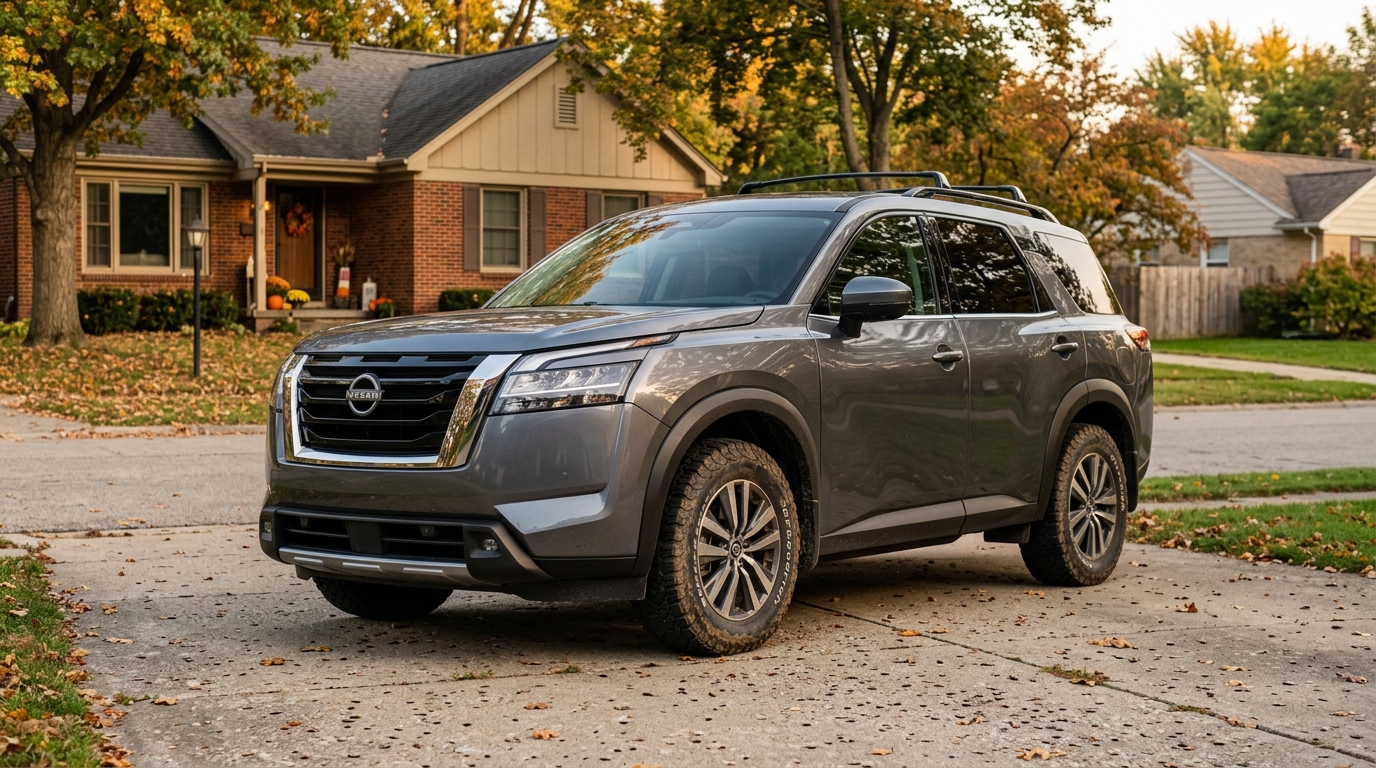
Preparing a Nissan vehicle for Chicago winter weather requires inspecting the 12-volt battery health, evaluating brake pad thickness and rotor surfaces, topping off cold-weather washer fluid, and checking tire tread depth before temperatures drop below freezing. Testing battery voltage and cold cranking capacity in late summer ensures reliable starting power when winter frost strains the electrical system.
As summer draws to a close, transitioning your vehicle care routine prevents severe weather from catching you off guard. Elevated summer temperatures accelerate internal chemical degradation in car batteries, making late August and September the ideal time for preventive maintenance. While official owner manuals and factory guidelines for future releases like the 2027 Nissan Rogue AWD, 2027 Nissan Pathfinder 4x4, and 2027 Nissan Altima have not yet been fully detailed by the manufacturer, service expectations are anticipated to closely mirror outgoing model recommendations. For these upcoming models, routine fall care remains essential to preserve factory warranty protections and maintain mechanical dependability.
Taking a systematic approach to seasonal prep protects vital components against harsh Midwestern driving environments. High humidity and heavy stop-and-go traffic strain engine cooling loops, transmission fluids, and braking assemblies throughout the summer months. Scheduling a complete multi-point inspection before autumn rains begin gives our technicians time to clean terminal corrosion, measure brake friction material, and inspect underbody components for signs of wear. Finding our service center location is simple for local drivers seeking expert attention.
Addressing early warning signs during late summer prevents minor component wear from cascading into major roadside failures when freezing temperatures arrive. If you notice delayed engine cranking, soft brake pedal response, or unusual dashboard warnings, give our service advisors a call (872) 278-7632 for direct, professional advice. You can also explore how we support top Nissan vehicles built for local driving to keep your crossover, sedan, or SUV running smoothly in every season.
Table of Contents
- What Routine Maintenance Tasks Should You Prioritize on Your Nissan as Summer Ends?
- Why Is Checking Cold Cranking Amps Vital for Your Nissan Battery Before Chicago's First Freeze?
- What Specific Signs of Brake Wear Should Technicians Look For Before the Rainy Fall Season?
- Should You Get Nissan Dealer Service or an Independent Mechanic for Fall Maintenance?
- Frequently Asked Questions About Fall Nissan Battery and Brake Prep
- Schedule Your Fall Nissan Battery and Brake Inspection
What Routine Maintenance Tasks Should You Prioritize on Your Nissan as Summer Ends?
Summer heat degrades vital vehicle fluids, weakens battery plates, and accelerates brake wear, making late summer the critical window to prioritize a battery voltage test, brake pad measurement, cabin air filter replacement, and tire rotation. Addressing these routine items before fall rain and winter freezes prevents unexpected mechanical failures during daily commutes.
Chicago driving subjects vehicles to rigorous stop-and-go patterns, prolonged idling, and severe temperature fluctuations. These conditions qualify as severe operating schedules under factory guidelines. While standard oil change intervals for models using full synthetic lubricants typically range between 5,000 miles and 7,500 miles under normal conditions, city driving warrants service closer to 3,500 miles or 5,000 miles. Prioritizing key maintenance tasks at the end of summer keeps your engine lubricated, your cabin air clean, and your tires wearing evenly.
- Battery Voltage and Amperage Testing: Evaluates remaining charge capacity and identifies internal plate sulfation caused by summer heat.
- Brake Pad and Rotor Inspection: Measures pad thickness against the minimum safety threshold and checks rotors for heat scoring or warping.
- Engine Oil and Filter Service: Removes accumulated soot, moisture, and debris while replenishing vital engine lubricants.
- Tire Rotation and Pressure Calibration: Promotes uniform tread wear across all four tires and adjusts pressure for dropping ambient air temperatures.
- Air Filter Replacements: Swaps out dust-clogged engine air filters and pollen-filled cabin air filters to maintain engine efficiency and HVAC airflow.
Staying proactive with seasonal upkeep extends component longevity and ensures your vehicle remains your family’s next reliable ride. Visiting our main website makes it easy to review maintenance schedules tailored to your specific model. When you are ready to prepare your vehicle for changing weather, reach out to our service team to set up your seasonal checkup.
Why Is Checking Cold Cranking Amps Vital for Your Nissan Battery Before Chicago's First Freeze?
Checking cold cranking amps verifies whether a battery can deliver sufficient electrical current to start an engine at zero degrees Fahrenheit, when thickened engine oil requires up to twice the turning power while battery chemical efficiency drops by half. Testing amperage before Chicago experiences its initial freeze catches heat-damaged batteries before sudden morning temperature drops leave you stranded.
Car batteries suffer their most severe structural damage during peak summer heat, even though the symptoms rarely show until autumn. High ambient temperatures evaporate internal liquid electrolyte and accelerate plate corrosion inside the battery casing. A battery damaged by July heat might start an engine effortlessly on a mild September afternoon, but once temperatures drop toward freezing, its reduced chemical capacity fails to deliver required starting power.
A healthy 12-volt battery should show a static reading of 12.6 volts or higher with the engine turned off. A reading below 12.4 volts indicates a depleted charge or weakening cells that require professional testing. Standard factory batteries in the Midwest generally last between 3 and 5 years before requiring replacement. Drivers often ask whether a battery that starts fine in late August can fail on the first October frost; testing cold cranking capacity reveals internal grid degradation that summer starting hides.
Testing both voltage and conductance provides an accurate assessment of battery reserve capacity. Owners can read local driver feedback to see how our diagnostic checks prevent cold-weather starting issues. Electric vehicle drivers and owners of late-model crossovers can also learn about 12-volt auxiliary systems at our electric vehicle resource hub, as auxiliary batteries power vital vehicle safety modules and onboard computers in all modern powertrains.
What Specific Signs of Brake Wear Should Technicians Look For Before the Rainy Fall Season?
Technicians inspecting a Nissan before the rainy fall season evaluate brake pad friction material thickness, surface scoring or rust on rotors, caliper slide movement, and fluid moisture levels to guarantee responsive stopping on slick pavement. Key warning signs of wear include metallic squealing, pedal pulsation, spongy pedal feel, or steering wheel shudder during deceleration.
Rain-slicked autumn asphalt significantly increases stopping distances, making precise braking performance a critical safety requirement. During a professional inspection on models like a 2024 or upcoming 2027 Nissan Rogue AWD, technicians measure pad friction material using precision calipers. New brake pads typically feature 10 mm to 12 mm of friction material, while pads worn down to 3 mm or less require immediate replacement to prevent metal-to-metal contact with the rotor.
+--------------------------+-----------------------+----------------------------------+
| Component                | Nominal / Healthy     | Service / Replacement Threshold  |
+--------------------------+-----------------------+----------------------------------+
| Brake Pad Thickness      | 10 mm - 12 mm         | 3 mm or less                     |
| Brake Fluid Moisture     | Under 1% water        | 3% moisture content or higher    |
| Rotor Surface Condition  | Smooth, even surface  | Deep scoring, rust, or warping   |
| Battery Voltage (Engine) | 12.6V or higher       | 12.4V or lower (weak charge)     |
+--------------------------+-----------------------+----------------------------------+
Technicians also evaluate hardware components that affect braking feel and safety system integration. Advanced driver-assist systems like blind spot monitoring, automatic emergency braking, and adaptive cruise control rely on responsive mechanical brakes to execute automated slowing inputs accurately. Ensuring your brake system is fully functional makes your vehicle perfect for city streets and suburban errands regardless of weather conditions.
Knowing what to look for helps drivers address minor mechanical wear before it damages expensive components. Review our dealership commitment to quality service to see how factory-trained experts maintain your braking system. When you are ready for a thorough seasonal safety check, look up directions to our service bay for prompt attention.
Should You Get Nissan Dealer Service or an Independent Mechanic for Fall Maintenance?
Choosing Nissan dealer service over an independent mechanic ensures your vehicle is inspected by factory-trained technicians using specialized Consult diagnostic equipment and Genuine Nissan Parts that maintain factory warranty protections. While independent shops may offer lower hourly rates, authorized dealership service logs records directly into Nissan's national database and ensures precise calibration of advanced safety modules.
Under the federal Magnuson-Moss Warranty Act, vehicle owners retain the legal right to have routine maintenance performed at independent repair facilities without automatically voiding factory warranties. However, utilizing independent repair facilities places the responsibility on the vehicle owner to keep detailed service receipts, itemized parts lists, and proof that all installed components met strict OEM specifications. If an aftermarket component fails or causes damage to surrounding systems, manufacturer warranty coverage for that repair can be legally denied.
Choosing authorized dealership care removes this record-keeping burden while ensuring every service procedure strictly adheres to factory service bulletins. Dealership technicians complete specialized brand training and utilize proprietary diagnostic tools designed specifically for Nissan electrical systems, CVTs, and driver-assist safety suites. For commuters traveling along Irving Park Road or heading to local transit hubs, certified care provides complete confidence through every turn.
+------------------------------------+-------------------------+--------------------------+
| Service Category                   | Dealership Service Center| Independent Repair Shop  |
+------------------------------------+-------------------------+--------------------------+
| Factory-Trained Technicians        | Yes (Brand-Certified)   | Varies (General Techs)   |
| Specialized Diagnostic Equipment   | Nissan Consult Tools    | Generic OBD-II Scanners  |
| Parts Used                         | Genuine OEM Parts       | Aftermarket / Generic    |
| Centralized Warranty Record Logging| Automatic               | Manual Paper Receipts    |
+------------------------------------+-------------------------+--------------------------+
Maintaining your vehicle at an authorized service center protects the standard 3-year/36,000-mile bumper-to-bumper warranty and 5-year/60,000-mile powertrain warranty. Select new models also qualify for Nissan Maintenance Care, covering up to three scheduled oil changes and tire rotations within the first 2 years or 24,000 miles. You can follow our social media channels for seasonal maintenance updates or explore our detailed model year maintenance guide to learn more about official factory service intervals.
Frequently Asked Questions About Fall Nissan Battery and Brake Prep
Q: At what voltage reading should a Nissan battery be replaced before winter?
A fully charged 12-volt battery should read 12.6 volts or higher with the engine turned off. If a voltage test reveals a charge of 12.4 volts or lower, the battery is operating at a reduced capacity and warrants professional conductance testing. Batteries reading below 12.2 volts struggle significantly to start engines during freezing weather and should be replaced before winter arrives.
Q: How often should brake fluid be flushed on a Nissan vehicle in Chicago?
Nissan recommends flushing and replacing brake fluid approximately every 20,000 miles or 24 months. Brake fluid is hygroscopic, meaning it absorbs moisture from surrounding air over time. In climates with high humidity and wet winters, water accumulation lowers the fluid boiling point and causes internal corrosion in brake lines and calipers, leading to a soft brake pedal feel.
Q: Does summer heat cause more damage to a car battery than winter cold?
Yes, summer heat causes the primary structural and chemical damage inside a battery by accelerating internal plate corrosion and evaporating electrolyte fluid. Cold winter weather does not cause heat wear, but low temperatures expose existing battery damage by slowing chemical reactions and requiring significantly more electrical power to turn over cold engine oil.
Q: Are seasonal service rebates available directly from Nissan North America?
Nissan North America frequently offers seasonal nationwide service rebates and promotional offers on genuine maintenance parts. These mail-in or digital rebates often cover replacement items such as Genuine Nissan batteries, front and rear brake pads, rotor replacements, and sightline wiper blades. Drivers can check active offers when booking service appointments.
Q: Do Chicago Nissan service centers provide shuttle service or loaner vehicles?
Many authorized Nissan dealership service departments offer complimentary local shuttle rides or loaner vehicles for extended maintenance appointments when scheduled in advance. These transportation assistance options help busy professionals and families maintain their daily schedules while their vehicles undergo thorough safety inspections or complex mechanical repairs.
To learn more about our facility standards and service options, drivers can learn more about our team or consult our advisors when evaluating ownership considerations like comparing buying vs leasing terms. Be sure to check view current service specials and manufacturer rebates to save on your next maintenance visit.
Schedule Your Fall Nissan Battery and Brake Inspection
Taking proactive care of your vehicle’s battery and braking system before late summer transitions into fall is the single best way to ensure reliable performance through Chicago’s unpredictable weather. From testing cold cranking capacity to measuring brake pad friction material, early seasonal service prevents costly repairs and keeps your crossover, sedan, or SUV operating safely.
Our factory-trained technicians use Genuine Nissan Parts and specialized diagnostic equipment to evaluate every mechanical and electrical safety system on your vehicle. Whether you are driving a late-model Rogue or preparing a classic Altima for upcoming cold weather, our team provides transparent guidance and efficient service tailored to your daily driving demands.
Do not wait for an unexpected no-start condition or noisy brakes to interrupt your routine. You can check our dealership address and directions or give our service department a call at (872) 278-7632 to schedule your fall battery and brake inspection today. You can also explore our community involvement initiatives to see how we support local drivers on and off the road.