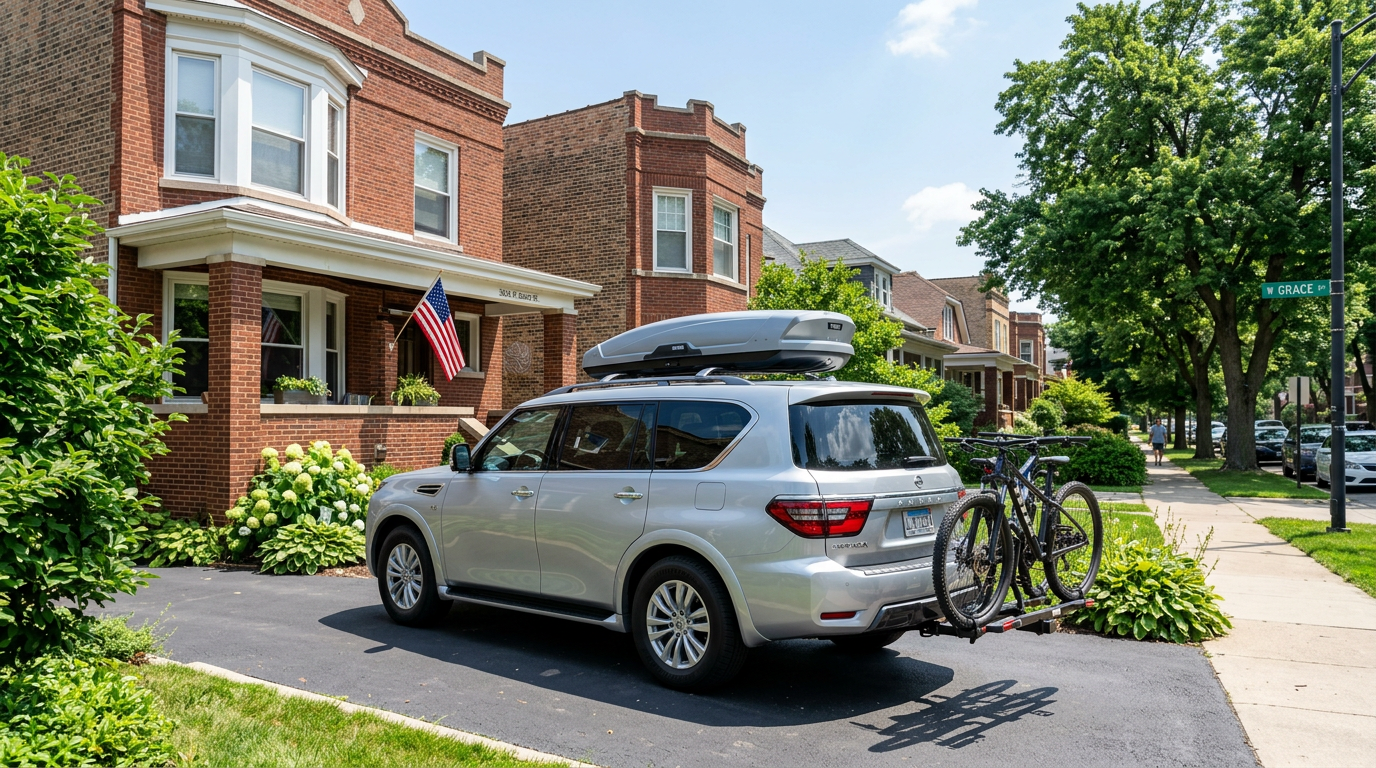
Sustained summer temperatures place immense stress on automotive cooling systems, tires, and electrical networks. For professionals who face the daily, high-heat commute into downtown Chicago, preparing a vehicle for a long summer road trip is a necessity to avoid unexpected roadside delays. While modern engineering makes vehicles highly resilient, extreme thermal loads accelerate wear on critical wear items like the 12-volt battery and the climate control system.
Our service team recommends a comprehensive inspection of all fluid levels, tire conditions, and electrical outputs before departing. If you plan to travel in a highly capable vehicle like the 2026 Nissan Pathfinder, which features a robust 3.5L engine and a smooth 9-speed automatic transmission, ensuring that the cooling system is fully pressurized is vital. The Pathfinder can tow up to 6,000 lbs when properly equipped, but pulling heavy loads in peak summer temperatures demands peak mechanical efficiency.
Before packing the cargo area or hitting the interstate, drivers can review our guide to the best Nissan models for local driving to understand how different powertrains handle extreme seasonal transitions. If you suspect your vehicle is overdue for a checkup, you can easily find directions to our service center or speak directly with one of our certified service advisors by giving our team a quick call today. Taking a few proactive steps now ensures your summer travels remain safe, comfortable, and entirely uninterrupted.
Table of Contents
- How Intense Summer Temperatures Degrade Your Nissan 12-Volt Battery
- Why Preventive Battery Testing Matters More Before Summer Than Winter
- The Impact of Hot Highway Driving on Nissan Tire Pressure and Tread Safety
- Optimizing Cabin Airflow: When to Replace Your Nissan Rogue Cabin Air Filter
- Summer EV Preparation: Managing Battery Cooling and AC Efficiency on Long Trips
- Common Questions About Summer Road Trip Maintenance and Battery Care
- Schedule Certified Nissan Service Before Your Next Adventure
How Intense Summer Temperatures Degrade Your Nissan 12-Volt Battery
Many motorists mistakenly believe that sub-zero winter temperatures are the primary threat to automotive battery health. However, battery industry research indicates that heat is the leading cause of premature battery failure because high temperatures accelerate internal chemical reactions that degrade the internal plates and electrolyte [4]. Specifically, for every 15°F increase in a car battery's average operating temperature above 77°F, its overall service life is cut in half [4].
Under the hood of a vehicle like the 2026 Nissan Altima, which utilizes an efficient 2.5L engine and an Xtronic CVT, the combination of engine operating heat and high ambient air temperatures creates a highly volatile environment. This extreme heat speeds up the evaporation of the liquid electrolyte inside standard flooded lead-acid batteries [1, 7]. When the fluid level drops, the internal lead plates are exposed to air, which rapidly accelerates corrosion and permanently reduces the battery’s capacity to hold a charge [1, 4].
Our technicians frequently help drivers who are surprised to learn that summer heat, rather than winter cold, is the leading cause of premature battery failure. Common warning signs of thermal degradation include a slow engine crank when starting, flickering interior dashboard lights, or a physical swelling of the battery's plastic casing [3]. If you notice a white or blue powdery substance accumulating around the metal terminals, this indicates acid gas is escaping and corroding the connection, which restricts the flow of electrical current [3].
To protect your vehicle's electrical system, parking in shaded areas or a garage can mitigate extreme under-hood temperatures [3]. For more tips on vehicle care and our full suite of automotive services, you can visit our homepage to explore our maintenance offerings. When you are ready to have your electrical system professionally inspected, you can view our directions page to find the most convenient route to our facility.
Why Preventive Battery Testing Matters More Before Summer Than Winter
While cold weather often gets the blame for battery failures because a weakened battery finally gives out when trying to crank a cold engine, the actual structural damage is done during the hot summer months. A battery that is marginally degraded may function adequately during mild spring weather, but the added stress of hot-weather driving can cause sudden, complete failure. During a long road trip, the alternator operates under a high continuous load to power the air conditioning, infotainment systems, and safety features like blind spot monitoring, leaving little margin for a weak battery.
A professional load and conductance test evaluates the battery's capacity to deliver sufficient starting power under simulated stress [3]. This diagnostic test takes only a few minutes but provides a clear, transparent look at the battery's remaining life. If the test reveals that the battery's cold cranking amps have dropped below the manufacturer's recommended threshold, replacing it before your trip is the most reliable way to prevent a breakdown.
At our service center, we utilize advanced diagnostic equipment to precisely measure your battery's health, ensuring you can travel with complete confidence. To learn more about our commitment to transparent service and quality care, you can discover the Berman advantage and see how we support our guests. Additionally, to help keep your vehicle maintenance affordable, drivers can check our current service and parts incentives before scheduling a visit. Catching a weak battery in our climate-controlled service bays is far more convenient than dealing with a dead battery at a remote highway rest stop.
The Impact of Hot Highway Driving on Nissan Tire Pressure and Tread Safety
Tire pressure rises by approximately 1 PSI for every 10-degree Fahrenheit increase in ambient temperature, meaning a tire adjusted on a cool morning can quickly become overpressurized on hot asphalt. High highway speeds generate additional internal friction and heat, further compounding this pressure expansion. Driving on overinflated tires reduces the tire's contact patch with the road, leading to uneven center tread wear, a harsher ride, and compromised handling during sudden evasive maneuvers.
Conversely, underinflation is an even greater hazard during the summer. An underinflated tire flexes excessively at the sidewalls, which generates rapid, extreme internal heat buildup. On sizzling pavement, this excessive heat can cause the tire's internal rubber and steel belts to delaminate, culminating in a sudden blowout. To maintain safety, always check your tire pressure in the morning before driving when the tires are cold, and inflate them strictly to the specification listed on the driver-side door jamb placard.
Our service team is dedicated to keeping your vehicle performing safely on every journey. To see how we have helped other local drivers prepare their vehicles for the road, you can read our customer reviews online. If you are driving a newer model, you can also read our model year guide to understand the specific tire pressure monitoring technologies equipped on your vehicle. For real-time updates, maintenance tips, and community discussions, feel free to connect on social media with our team.
Optimizing Cabin Airflow: When to Replace Your Nissan Rogue Cabin Air Filter
A clean cabin air filter in a vehicle like the 2026 Nissan Rogue is the primary barrier against seasonal allergens, dust, and urban exhaust. For families driving the stop-and-go streets of Irving Park near Portage Park, a clogged cabin filter quickly restricts air conditioning performance. When the filter is packed with debris, the blower motor must work significantly harder to push cool air into the cabin, which strains the vehicle’s electrical system and reduces overall cooling efficiency.
Automotive service standards recommend replacing the cabin air filter every 15,000 to 30,000 miles, or at least once a year. If you frequently drive in heavy traffic or dusty environments, more frequent replacements may be necessary to maintain optimal airflow. A fresh filter ensures that the climate control system in your Rogue, which offers roughly 36 cubic feet of rear cargo space for your family's gear, can easily maintain a comfortable cabin temperature.
When our service team performs a multi-point inspection on a vehicle like the Rogue, we often find that owners ask how often to replace the cabin filter, especially after a pollen-heavy spring. Keeping your climate control system in peak condition prevents unnecessary strain on the engine's cooling and electrical networks. While our service team keeps your current vehicle running smoothly, some drivers eventually evaluate whether to keep maintaining an older vehicle or explore options like comparing buying versus leasing a newer, highly efficient model.
Summer EV Preparation: Managing Battery Cooling and AC Efficiency on Long Trips
Preparing an electric vehicle for a long summer journey requires a slightly different approach than preparing an internal combustion vehicle. While electric vehicles do not have traditional engines that can overheat, their high-voltage lithium-ion batteries rely on active thermal management systems to stay within an optimal operating temperature range. Extreme summer heat forces these cooling systems to run continuously, which consumes electrical energy and can slightly reduce your driving range.
To maximize efficiency on a hot road trip, one of the most effective strategies is to pre-condition the vehicle's cabin while it is still plugged into your home charger. This process uses grid power rather than the vehicle's battery to cool the interior, preserving your full range for the highway. Additionally, when utilizing public DC fast chargers, it is highly recommended to charge only up to 80% capacity. Because charging speeds slow down significantly for the final 20 percent to protect the battery from heat-induced degradation, stopping at 80 percent saves valuable travel time and reduces thermal stress on the battery pack.
Our team is proud to support local drivers as they transition to electric mobility. To see how we support local initiatives and green driving programs, you can see our community involvement page. By following simple summer EV practices—such as keeping tires properly inflated and utilizing eco-mode settings—you can ensure a smooth, efficient, and highly enjoyable summer journey.
Common Questions About Summer Road Trip Maintenance and Battery Care
Before embarking on your next summer journey, understanding the basic maintenance requirements of your vehicle can prevent common roadside issues. To learn more about our experienced technicians and our dedication to transparent automotive care, you can learn more about us. If you have specific questions about your vehicle's maintenance schedule or need to speak with a technician, please contact our team today.
Q: How does high heat affect my Nissan's battery life?
A: High temperatures accelerate internal chemical reactions and cause the liquid electrolyte inside your battery to evaporate [1, 4]. This process leads to rapid plate corrosion and permanent capacity loss, which can cause sudden battery failure [1, 4].
Q: Can I test my Nissan battery's health at home?
A: Yes, you can use a digital multimeter to check the voltage when the engine is completely off. A healthy, fully charged 12-volt battery should read 12.6 volts or higher, while a reading below 12.4 volts indicates a weak charge that warrants professional testing.
Q: What is the correct tire pressure for my Nissan during a summer road trip?
A: You should always inflate your tires to the exact specification listed on the driver-side door jamb placard, checked when the tires are cold. Do not use the maximum pressure molded into the tire sidewall, and never release air from hot tires to compensate for natural heat expansion.
Q: How does a clogged cabin air filter impact my AC system?
A: A clogged filter restricts the volume of air entering the cabin, forcing the blower motor to run longer and harder to cool the interior. This restriction reduces the cooling output of your air conditioning and increases the mechanical load on your engine and electrical system.
Q: What are the best practices for charging my EV on a summer road trip?
A: Pre-cool the cabin while the vehicle is still connected to your home charger to preserve battery range. During your trip, plan charging stops at high-power stations and limit DC fast charging to 80 percent to avoid the slow charging speeds and high heat buildup associated with topping off the battery.
Schedule Certified Nissan Service Before Your Next Adventure
A successful summer road trip depends on the reliability of your vehicle. At Berman Nissan of Chicago, our factory-trained technicians use specialized diagnostic equipment and genuine OEM parts to ensure your vehicle is fully prepared for the demands of hot-weather driving. Our team provides comprehensive battery health checks, tire rotations, and complete climate control system services to ensure your vehicle is in peak condition.
For drivers of electric models, we invite you to visit our EV center to learn more about specialized thermal management checks and software updates designed to optimize battery efficiency. In addition to our in-house expertise, every eligible Nissan vehicle is backed by comprehensive manufacturer support, giving you access to Nissan Roadside Assistance at 877-647-7267 for flat tires, battery jumps, or emergency towing to the nearest authorized service center.
Do not wait for a warning light to disrupt your travel plans. To schedule your pre-trip multi-point inspection, you can get directions to our service center located at 3456 N Kedzie Ave, Chicago, IL 60618, or speak with a service advisor directly by calling (872) 278-7632 today. Let us help you keep your summer adventures safe, cool, and worry-free.