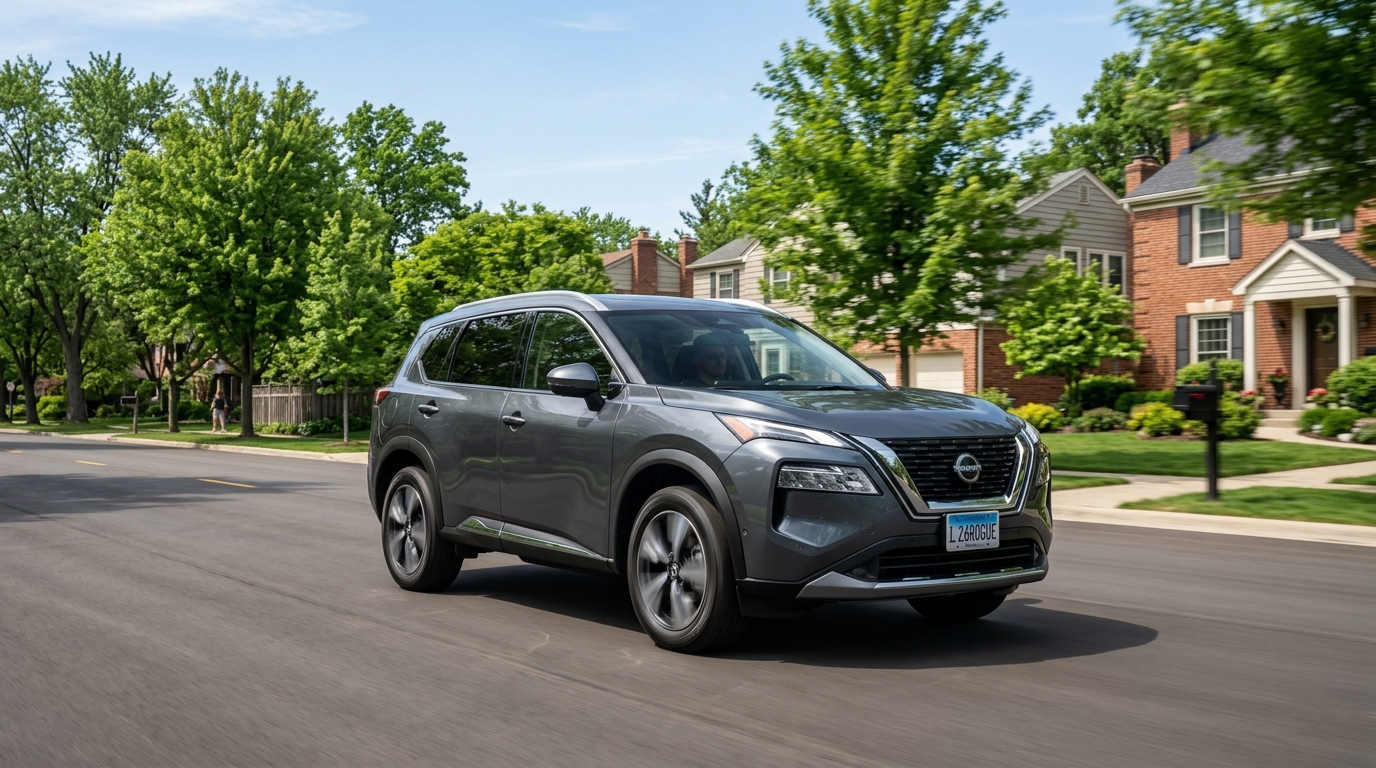
Using Eco drive mode effectively reduces real-world fuel consumption by approximately 5% to 10% under typical driving conditions. Rather than altering EPA-certified drivetrain ratings, the system remaps electronic throttle sensitivity, commands earlier upshifts through the Xtronic CVT, and moderates accessory power draws. This electronic management prevents aggressive acceleration and high-RPM engine operation, helping drivers achieve maximum efficiency during daily commutes.
On vehicles like the 2026 Nissan Rogue, equipped with a 1.5L VC-Turbo engine, or the 2026 Nissan Altima, rated up to 26 city / 36 hwy MPG, activating Eco drive mode alters how the powertrain responds to accelerator pedal inputs. In standard driving modes, pressing the gas pedal yields an immediate and direct surge of power. In contrast, Eco drive mode introduces a smoother, dampened pedal response curve. Even if your foot presses down quickly, the engine control unit smooths out the fuel delivery rate to avoid wasting gasoline during acceleration.
Engineers design this system to assist drivers who frequently operate in stop-and-go traffic or dense suburban environments. Because rapid acceleration consumes a disproportionate amount of fuel, smoothing out pedal inputs helps keep the engine operating within its most efficient load range. To maintain peak fuel economy over the life of your vehicle, routinely scheduling certified multi-point inspections and maintenance at our service center location on Kedzie Ave ensures that intake systems, spark plugs, and sensors remain clean and fully operational.
If you ever notice a sudden drop in fuel economy while using Eco drive mode, our factory-trained technicians can run diagnostic scans on your vehicle's engine control module to verify that all sensors are communicating correctly. You can easily reach our team by giving us (872) 278-7632 to discuss any fuel efficiency concerns or to learn more about efficient Nissan models in our lineup.
Table of Contents
- What Does Nissan ECO Driving Mode Do to Fuel Efficiency and Air Conditioning?
- What Gear Ratios Does the Xtronic CVT Utilize During ECO Mode Operation?
- How Much Money and Fuel Can Nissan ECO Mode Save Per Year in Chicago?
- Does Turning Off ECO Mode Increase Towing Capacity on Nissan SUVs?
- How Does Nissan ECO Mode Compare to Toyota, Honda, and Hyundai Systems?
- Common Maintenance Questions About Nissan ECO Driving Mode
- Maintaining Peak Fuel Efficiency at Berman Nissan of Chicago
What Does Nissan ECO Driving Mode Do to Fuel Efficiency and Air Conditioning?
Adjustments to throttle mapping, transmission shifts, and climate control workload help Nissan Eco drive mode improve fuel efficiency. By regulating these systems simultaneously, the vehicle minimizes energy waste without sacrificing driver control or mechanical engine power.
The most noticeable mechanical adjustment occurs within the climate control system. Running the air conditioning compressor places a continuous mechanical load on the engine via the accessory drive belt. When Eco drive mode is active, the HVAC control module reduces compressor cycle frequency and slightly scales back blower fan power. By softening compressor operation during heavy acceleration, the engine expends less mechanical horsepower on accessories and directs more energy toward propelling the vehicle.
- Throttle Response Calibration: Reduces pedal sensitivity to eliminate unintentional fuel spikes during stop-and-go acceleration.
- Climate Control Load Reduction: Modulates air conditioning compressor operation to lower accessory drag on the engine crankshaft.
- Transmission Shift Optimization: Promotes lower engine RPM by adjusting ratio expansion parameters within the transmission logic.
Driving through dense urban corridors like Irving Park Road frequently demands constant stopping and restarting, where aggressive pedal application rapidly degrades fuel mileage. Operating in Eco drive mode dampens those abrupt starts, smoothing out vehicle movement. Essential safety systems like blind spot monitoring remain fully engaged regardless of which drive mode is active, ensuring peace of mind on crowded streets.
For questions regarding climate control performance or accessory belt maintenance, you can explore our dealership website or directly contact our service team to consult with an advisor.
What Gear Ratios Does the Xtronic CVT Utilize During ECO Mode Operation?
The Xtronic CVT utilizes continuously variable gear ratios that expand ratio coverage to maintain low engine speeds across a wide range of road velocities during Eco drive mode operation. Unlike traditional automatic transmissions that rely on fixed planetary gear sets, the continuously variable transmission adjusts pulley widths to deliver an infinite selection of effective drive ratios between its lowest and highest limits.
When Eco drive mode is engaged, the transmission control module commands the secondary pulley to widen or narrow more rapidly, forcing the steel drive belt to transition into higher effective gear ratios sooner. This behavior keeps engine speeds lower during acceleration and cruising, often keeping engine revs well below 2,000 RPM at highway speeds. Maintaining lower engine speeds directly reduces friction losses and minimizes fuel consumption per mile traveled.
Proper maintenance of the transmission system is essential for preserving these efficiency gains over time. Over extended mileage, transmission fluid undergoes thermal degradation, which can impact internal hydraulic pressure and pulley responsiveness. Changing transmission fluid at manufacturer-recommended intervals protects internal components against friction and ensures smooth ratio adjustments.
Drivers seeking maximum efficiency across all powertrain configurations can read customer reviews from local vehicle owners or visit our EV center to learn about fully electric alternatives that eliminate traditional fuel consumption entirely.
How Much Money and Fuel Can Nissan ECO Mode Save Per Year in Chicago?
A driver logging approximately 15,000 miles per year can expect to save between $100 and $200 annually on gasoline by consistently utilizing Eco drive mode. This financial saving reflects a fuel reduction of roughly 30 to 60 gallons per year, depending on individual driving habits, vehicle weight, and seasonal traffic patterns.
The exact monetary impact varies depending on whether your driving consists of steady highway cruising or congested stop-and-go traffic. On major commuting corridors such as I-294, where traffic flow fluctuates between high speeds and abrupt stops, Eco drive mode yields the greatest benefit by dampening the sudden accelerations required to rejoin moving traffic.
| Driving Scenario | Estimated Annual Miles | Standard Fuel Use (Gal) | Fuel Saved with Eco Mode (Gal) | Estimated Annual Dollar Savings |
|---|---|---|---|---|
| Heavy Urban Commuting | 12,000 | 480 | 36 - 48 | $120 - $160 |
| Mixed Highway / City | 15,000 | 500 | 30 - 50 | $100 - $175 |
| Suburban Long-Distance | 18,000 | 545 | 38 - 55 | $130 - $190 |
Environmental factors also influence annual fuel savings. During harsh winter conditions, cold ambient temperatures delay engine warm-up times and increase engine oil viscosity, which naturally lowers baseline efficiency. Combining Eco drive mode with regular tire pressure checks and seasonal wheel alignments helps mitigate winter efficiency drops.
Keeping up with scheduled vehicle maintenance ensures that your car remains your family’s next reliable ride for years to come. Drivers interested in optimizing ownership care can consult our 2026 Nissan model guide, review the Berman advantage for service guarantees, or get directions to our facility to speak with a service professional.
Does Turning Off ECO Mode Increase Towing Capacity on Nissan SUVs?
Turning off Eco mode does not increase the maximum towing capacity rating of a Nissan SUV, but it restores immediate throttle responsiveness and full torque availability required when pulling heavy loads. A vehicle's towing capacity is determined by structural frame strength, axle ratings, cooling system thermal capacity, suspension architecture, and braking capability rather than selectable electronic drive modes.
When towing a trailer or hauling heavy cargo with an SUV like the 2026 Nissan Pathfinder or the 2026 Nissan Armada equipped with a 3.5L twin-turbo V6 producing 516 lb-ft of torque, disabling Eco drive mode is strongly recommended. Leaving Eco drive mode active while trailering can cause sluggish pedal response, making it harder to merge onto high-speed roadways or climb steep highway inclines efficiently. Switching to Tow Mode or Sport Mode adjusts shift programming to hold gears longer, providing engine braking assistance and immediate acceleration when needed.
When drivers come into our service bay asking why their acceleration feels slightly subdued in heavy traffic, our technicians show them the instrument cluster indicator light to confirm Eco drive mode is engaged. Understanding how drive mode indicators operate helps owners choose the proper setting for trailering or daily driving.
To stay updated on vehicle care tips, feel free to connect with us on social media or check out how to view current maintenance offers before booking your next service visit.
How Does Nissan ECO Mode Compare to Toyota, Honda, and Hyundai Systems?
Nissan Eco drive mode differs from competitor systems primarily in its seamless integration with the Xtronic CVT, which adjusts gear ratios continuously rather than relying on fixed automatic gear steps used by many competing vehicles. While alternative systems adjust engine parameters, Nissan's integration ensures smoother ratio transitions that hold engine speeds low without noticeable gear hunting.
Toyota Hybrid Synergy Drive ECO modes focus heavily on electric motor blending and engine suppression, limiting gasoline engine activation under light throttle. Honda ECON and Hyundai Blue Drive ECO systems rely on traditional stepped automatic transmission shift logic, dampening throttle mapping and shifting aggressively into higher fixed gears. In contrast, Nissan's continuously variable design allows the engine to operate smoothly at exact efficiency nodes, making it perfect for city streets and suburban errands.
Nissan ECO MODE:
├── Electronic Throttle Dampening (Reduces sudden fuel spikes)
├── Xtronic CVT Continuous Ratio Expansion (Holds low engine RPM)
└── HVAC Compressor Workload Reduction (Lowers accessory engine drag)

COMPETITOR SYSTEMS (Toyota / Honda / Hyundai):
├── Fixed-Step Gear Shift Adjustments (Can cause gear hunting on inclines)
├── Hybrid Electric Motor Blending (Toyota-specific)
└── Aggressive Power Output Caps (Can feel restrictive during passing)
Maintaining your powertrain with certified service guarantees that electronic controls, transmission fluids, and throttle bodies function as engineered. Drivers looking to maintain their vehicle long-term can explore vehicle ownership options or learn more about see our community involvement across our local neighborhood.
Common Maintenance Questions About Nissan ECO Driving Mode
Q: Does driving in Nissan Eco mode cause long-term carbon buildup in the engine?
No, driving in Eco drive mode does not cause premature carbon buildup in modern direct-injection or VC-Turbo engines. Engine control units automatically adjust air-fuel ratios, spark timing, and valve timing to maintain complete fuel combustion regardless of selected drive modes. Following recommended oil change intervals and using high-quality fuel prevents intake valve deposits and maintains clean combustion chambers over long mileage.
Q: Will using Eco mode reduce wear on the air conditioning compressor and belt drive?
Yes, utilizing Eco drive mode can reduce mechanical stress on the air conditioning compressor and serpentine drive belt. Because the system cycling logic moderates compressor engagement frequency and avoids high-RPM compressor clutch lockups during sudden acceleration, drive belt friction and compressor clutch wear are slightly reduced over time.
Q: How can a driver verify that Nissan Eco mode is active and functioning properly?
A driver can confirm Eco drive mode activation by looking for the green "ECO" indicator light or digital icon on the instrument cluster display screen. Additionally, drivers will notice a smoother, less sensitive accelerator pedal response. If the indicator fails to illuminate when the button or dial is selected, a diagnostic check at our service department can identify any electrical or switch communication issues.
Q: Should Eco mode be kept on during cold winter weather in Chicago?
Eco drive mode can be safely used during winter driving because its softened throttle response helps prevent wheel spin on icy or slippery road surfaces. However, on extremely cold mornings, disabling Eco mode briefly allows the cabin heating system to warm up more rapidly by letting the engine reach normal operating temperature without climate restrictions.
Q: Does Eco mode affect the operation of Nissan Safety Shield 360 driver assistance features?
No, activating Eco drive mode does not alter or disable any driver assistance or safety technology, including Automatic Emergency Braking, Lane Departure Warning, or blind spot monitoring. Safety systems operate independently of efficiency drive modes to maintain full protective coverage under all driving conditions.
For additional support or to schedule an inspection with certified technicians, get directions to our Kedzie Ave location, call us directly at (872) 278-7632, or learn more about our team online.
Maintaining Peak Fuel Efficiency at Berman Nissan of Chicago
Maximizing your vehicle's fuel economy involves a combination of smart driving habits and consistent vehicle maintenance. While Eco drive mode provides an immediate electronic advantage by smoothing throttle inputs and optimizing Xtronic CVT ratio coverage, keeping mechanical components in peak operating condition is what preserves efficiency for the long haul. Clogged air filters, worn spark plugs, dragging brake calipers, and underinflated tires can quickly cancel out the fuel savings provided by electronic drive modes.
Our factory-trained service technicians at Berman Nissan of Chicago specialize in complete ownership care for your vehicle. From precision wheel alignments and tire pressure monitoring to transmission fluid flushes and electronic system diagnostics, our service team ensures your Nissan operates exactly as factory engineers intended. Routine multi-point inspections help catch minor wear before it impacts your gas mileage or driving comfort.
If you want to ensure your vehicle is delivering its maximum potential miles per gallon, schedule your next maintenance visit with our certified team today. You can book an appointment online or contact our service department directly to keep your Nissan running efficiently on every trip.