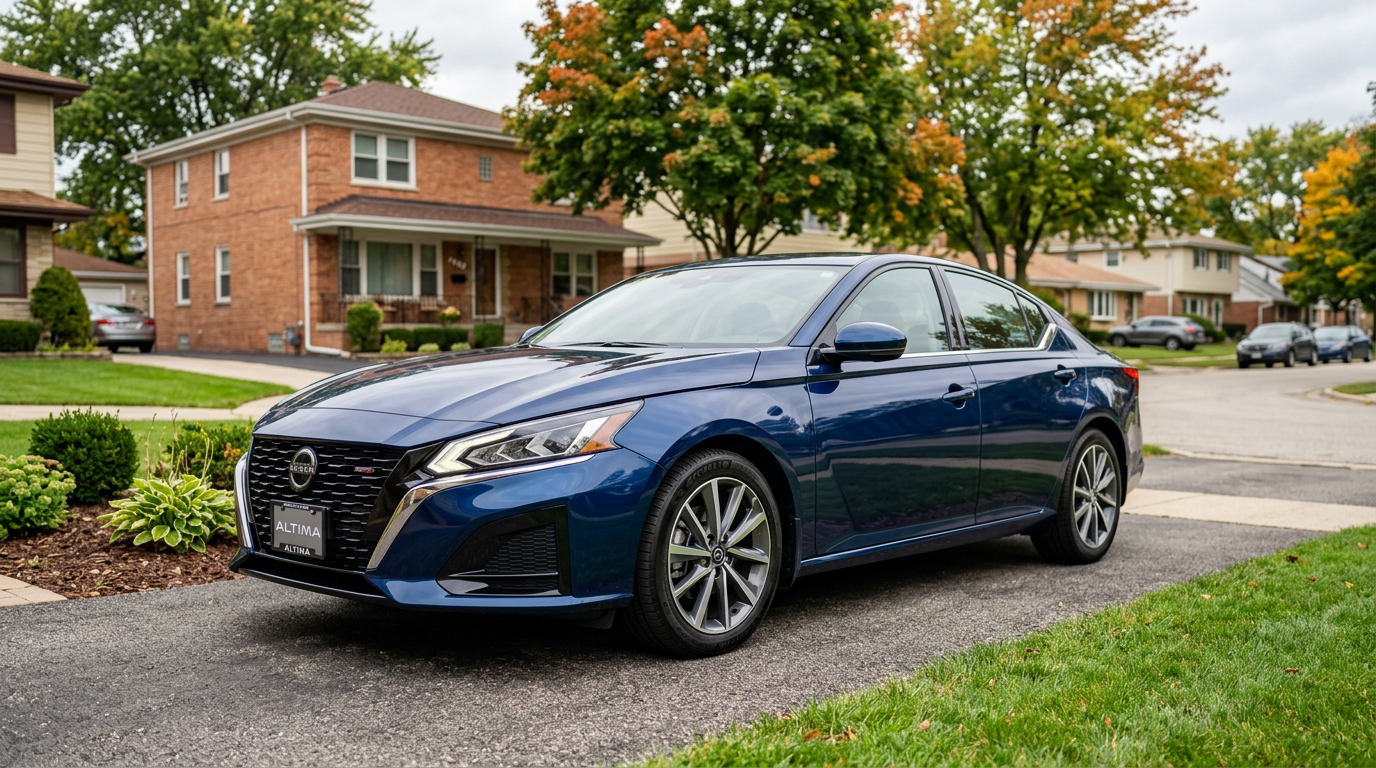
Owning a reliable vehicle means staying ahead of wear and tear before it impacts your daily drive. Nissan models are engineered with precision, but maintaining their performance requires consistent care and attention to scheduled upkeep. Neglecting basic fluid checks or delaying scheduled checkups can lead to accelerated component wear, decreased efficiency, and unexpected mechanical issues. By adopting a proactive approach to vehicle care, you protect your investment and ensure your car remains dependable for years to come.
Operating conditions play a significant role in how quickly your vehicle's components age. Stop-and-go city traffic, short trips, and extreme seasonal temperatures accelerate the breakdown of vital lubricants and filters. For example, driving a sedan like the 2026 Nissan Altima in dense traffic puts extra stress on the engine and transmission compared to steady highway cruising. Regularly checking fluid levels, monitoring tire pressure, and listening for unusual sounds are simple habits that help identify minor issues before they develop into costly repairs.
When your vehicle requires professional attention, choosing a service center with brand-specific expertise is crucial. Certified technicians understand the exact engineering specifications of your model, from the intricate electrical systems of modern crossovers to the specific calibration of advanced driver-assist safety features. For drivers seeking expert maintenance, you can easily find our service center on Kedzie Avenue. If you have immediate questions about an unusual warning light or need to speak with a service advisor, give our team a quick call at (872) 278-7632 to get direct, professional guidance.
To help you understand which models require specific care, you can explore the maintenance needs of popular Nissan models in our lineup. Additionally, if you drive a late-model vehicle, you can read our model year service guide to learn about the updated technology and factory recommendations for newer vehicles.
Table of Contents
- What is Included in a Nissan Standard Factory Maintenance Service
- How Often Does a Nissan Vehicle Need to Be Serviced
- Understanding the Warning Signs of a Failing Nissan CVT
- Will Your Nissan Factory Warranty Be Voided by Using an Independent Mechanic
- Nissan DIY Maintenance Versus Tasks Best Left to Certified Technicians
- Answers to Common Nissan Maintenance and Service Questions
- Maintain Your Vehicle's Performance at Berman Nissan of Chicago
What is Included in a Nissan Standard Factory Maintenance Service
A standard factory maintenance service is a comprehensive health check designed to keep your vehicle operating at peak efficiency. Rather than simply changing the engine oil, factory-trained technicians perform a structured series of inspections and replacements dictated by the manufacturer's engineering standards. This systematic approach ensures that every critical safety, mechanical, and electrical system is evaluated during your visit.
At the core of this service is the engine oil and filter change, which removes accumulated contaminants and replenishes the lubricants that protect internal engine components. Alongside the oil change, technicians perform a tire rotation to promote even tread wear, extending the lifespan of your tires and maintaining optimal traction. A cornerstone of the factory visit is the complimentary multi-point inspection, which covers:
- Fluids: Checking and topping off windshield washer fluid, coolant, power steering fluid, and brake fluid.
- Brakes: Inspecting brake pad thickness, rotor condition, calipers, and brake lines for signs of wear or leaks.
- Battery: Testing the battery's cold cranking amps, overall charge capacity, and inspecting cable connections for corrosion.
- Belts and Hoses: Examining drive belts and coolant hoses for cracks, fraying, or softening.
- Suspension and Steering: Checking shocks, struts, tie rods, and steering linkage for play or damage.
For larger family vehicles like the three-row 2026 Nissan Pathfinder, which is frequently used for heavy hauling and road trips, these regular inspections are vital for passenger safety. During the multi-point inspection, technicians also assess cabin comfort by checking the cabin air filter, which keeps dust and pollen out of the interior. To learn more about our commitment to keeping local vehicles safe and reliable, you can visit our homepage or take a moment to see our community involvement and how we support local drivers.
How Often Does a Nissan Vehicle Need to Be Serviced
Determining the correct service interval for your vehicle depends on both elapsed time and mileage, as well as your specific driving habits. Nissan recommends scheduled maintenance based on a "miles or months, whichever comes first" schedule. For the majority of late-model vehicles, including the 2026 Nissan Rogue, a standard service interval of 5,000 to 7,500 miles or 6 months is recommended for routine oil changes and tire rotations.
However, driving habits heavily influence this timeline. Nissan categorizes driving into "normal" and "severe" operating conditions. Severe conditions include frequent short trips of less than 10 miles, extensive stop-and-go driving, idling, towing, or operating in extremely cold climates. Under severe driving conditions, the oil change interval should be shortened to roughly 5,000 miles or 6 months to prevent sludge buildup and premature engine wear. Conversely, vehicles using full synthetic oil under normal driving conditions can safely extend oil changes to 7,500 to 10,000 miles or 12 months.
Beyond routine oil changes, major service milestones occur at larger intervals. For example, typical maintenance schedules call for replacing the cabin air filter every 15,000 miles or once a year, and the engine air filter every 15,000 to 30,000 miles depending on environmental dust levels. Brake fluid should be flushed and replaced approximately every 20,000 miles or 24 months to maintain firm pedal pressure and prevent moisture contamination.
To help plan your next service visit, you can learn more about our factory-certified team and our state-of-the-art facility. If you are unsure which maintenance schedule applies to your specific driving patterns, please contact our team today for a personalized consultation.
Understanding the Warning Signs of a Failing Nissan CVT
Many Nissan vehicles, including the 2026 Nissan Altima, utilize an Xtronic Continuously Variable Transmission (CVT) to optimize fuel economy and deliver smooth, seamless acceleration. Unlike a traditional automatic transmission that uses fixed gears, a CVT uses a system of pulleys and a high-strength steel belt to provide infinite gear ratios. Because of this unique design, CVTs require specific maintenance and display distinct warning signs when they begin to experience mechanical or electronic issues.
Recognizing the early symptoms of CVT wear can prevent a complete transmission failure on the road. Drivers should pay close attention to the following warning signs:
- Slipping or Hesitation: A feeling that the engine is revving high but the vehicle is slow to accelerate, or a sudden loss of power while driving.
- Shuddering or Shaking: A noticeable vibration or shaking sensation when accelerating from a complete stop or at highway speeds.
- Whining or Humming Noises: High-pitched whining sounds coming from the engine bay, which often increase in volume as vehicle speed increases.
- Delayed Engagement: A noticeable delay of several seconds when shifting from Park into Drive or Reverse.
- Fluid Leaks: Dark red or brown puddles forming under the front of the vehicle, indicating a potential leak in the CVT cooler lines or seals.
To keep a CVT operating reliably, Nissan recommends changing the CVT fluid approximately every 60,000 miles under normal driving conditions, and as early as every 30,000 miles under severe conditions like towing or frequent stop-and-go driving. If you want to see what other local drivers say about their diagnostic experiences with us, you can read our customer reviews online. For those interested in alternative powertrains that do not use a traditional transmission, we invite you to visit our EV center to explore our electric vehicle maintenance options.
Will Your Nissan Factory Warranty Be Voided by Using an Independent Mechanic
A common concern among vehicle owners is whether having routine maintenance performed by an independent mechanic or doing it themselves will void the factory warranty. Legally, the answer is a clear no. Under the federal Magnuson-Moss Warranty Act, vehicle manufacturers cannot require you to use a franchised dealership for routine maintenance to keep your warranty valid. You have the right to have your vehicle serviced at any licensed repair facility, or even perform basic maintenance in your own garage.
However, utilizing an independent shop comes with important responsibilities for the vehicle owner. If a warranty claim arises, the manufacturer has the right to deny coverage if they can prove that a failure was directly caused by improper maintenance, incorrect parts, or poor workmanship by an independent technician. To protect your warranty, you must keep meticulous records, including detailed receipts showing the date of service, vehicle mileage, and the specific parts and fluids used. The parts used must meet or exceed OEM specifications.
Choosing a certified dealership for your maintenance removes this administrative burden and provides unmatched peace of mind. When you service your vehicle at a factory-authorized center, all service records are automatically logged into Nissan's national database, ensuring seamless warranty verification. Furthermore, dealership technicians use exclusively Genuine Nissan Parts, which are backed by their own parts warranty. To see how we protect your vehicle's longevity, you can discover the Berman advantage and our commitment to quality service. When you are ready to visit us for factory-standard care, you can easily get directions to our dealership.
Nissan DIY Maintenance Versus Tasks Best Left to Certified Technicians
Taking care of basic maintenance tasks at home can be a rewarding way to stay connected to your vehicle, but it is important to know your limits. Simple, low-risk tasks can be safely performed in a residential driveway with basic hand tools. However, modern vehicles are highly complex machines with sensitive electronics and high-pressure systems that require specialized diagnostic equipment and professional expertise.
For hands-on owners, several routine maintenance tasks are perfectly safe to perform at home:
- Windshield Wiper Blades: Replacing worn wiper blades takes only a few minutes and requires no specialized tools.
- Engine and Cabin Air Filters: In most models, these filters are housed in easily accessible compartments and can be swapped out in under ten minutes.
- Fluid Level Checks: Regularly pulling the engine oil dipstick and visually checking coolant, brake, and washer fluid reservoirs is a great habit.
- Tire Pressure and Tread Depth: Using a digital pressure gauge and a tread depth tool helps you monitor tire health between rotations.
On the other hand, complex mechanical and electronic systems should always be left to certified professionals. Tasks such as brake pad and rotor replacement, suspension alignments, engine diagnostics, and CVT fluid flushes require precise torque specifications, specialized calibration tools, and proper disposal of hazardous fluids. Attempting these repairs at home without professional training can compromise vehicle safety and lead to expensive component damage.
For the latest updates on seasonal maintenance tips and expert advice from our service team, you can connect with us on social media. To help offset the cost of professional care for your vehicle's complex systems, you can also view our current service incentives and promotional offers before booking your appointment.
Answers to Common Nissan Maintenance and Service Questions
Navigating vehicle upkeep can sometimes bring up specific questions about schedules, costs, and procedures. Below are direct answers to some of the most common inquiries our service team receives from local owners.
Q: Does Nissan offer any complimentary maintenance for new vehicles?
Yes, Nissan offers a complimentary maintenance program called Nissan Maintenance Care on select new models. This factory-backed program covers up to three scheduled oil changes and tire rotations within the first 2 years or 24,000 miles of ownership, helping you establish a consistent maintenance routine from day one.
Q: What is checked during a standard multi-point inspection?
A standard multi-point inspection is a comprehensive health check. Certified technicians visually inspect and test your vehicle's fluid levels, windshield wiper blades, battery health, tire tread depth and inflation, brake pads, rotors, steering components, and suspension systems to ensure everything is operating safely.
Q: Are routine maintenance services covered under the standard factory warranty?
No, standard wear-and-tear maintenance items are not covered under the 3-year/36,000-mile new vehicle limited warranty. Items like oil changes, fluid flushes, wiper blades, and brake pads are considered regular ownership responsibilities, unless a component requires replacement due to a manufacturing defect.
Q: How does stop-and-go driving in Chicago affect my service schedule?
Frequent stop-and-go driving in dense urban areas qualifies as severe operating conditions. The constant idling and short trips prevent the engine from reaching its optimal operating temperature, which can lead to rapid oil degradation. For city driving, we recommend scheduling an oil change and tire rotation every 3,500 to 5,000 miles to keep your engine clean and protected.
Q: How do I know when my brake pads need to be replaced?
The most common warning signs of worn brake pads include a high-pitched squealing or squeaking noise when applying the brakes, a grinding sensation, or a spongy brake pedal. If you notice your vehicle taking longer to come to a complete stop, it is time to schedule a professional brake inspection.
If you are ready to bring your vehicle in for professional care, you can get directions to our Kedzie Avenue location. If you prefer to speak directly with an advisor about your maintenance schedule, please call us at (872) 278-7632. For those interested in exploring the long-term cost benefits of ownership, you can also compare buying vs leasing maintenance expectations.
Maintain Your Vehicle's Performance at Berman Nissan of Chicago
Keeping your vehicle in peak operating condition is a collaborative effort between attentive owners and certified service experts. Whether you are navigating daily city commutes in Irving Park or managing family drop-offs in Park Ridge, maintaining a regular service schedule is the single most effective way to ensure your vehicle remains safe, efficient, and dependable. From routine oil changes to complex electronic diagnostics, our factory-trained technicians are equipped with the specialized tools and Genuine Nissan Parts required to get the job done right.
At Berman Nissan of Chicago, we respect your busy schedule and aim to make vehicle maintenance as seamless as possible. Our modern facility offers convenient hours, transparent pricing, and a comfortable waiting area equipped with complimentary amenities. Do not wait for a minor warning sign to turn into a major disruption on your daily commute. Take a proactive step toward protecting your vehicle's longevity and performance by scheduling your next service appointment with our dedicated team today.