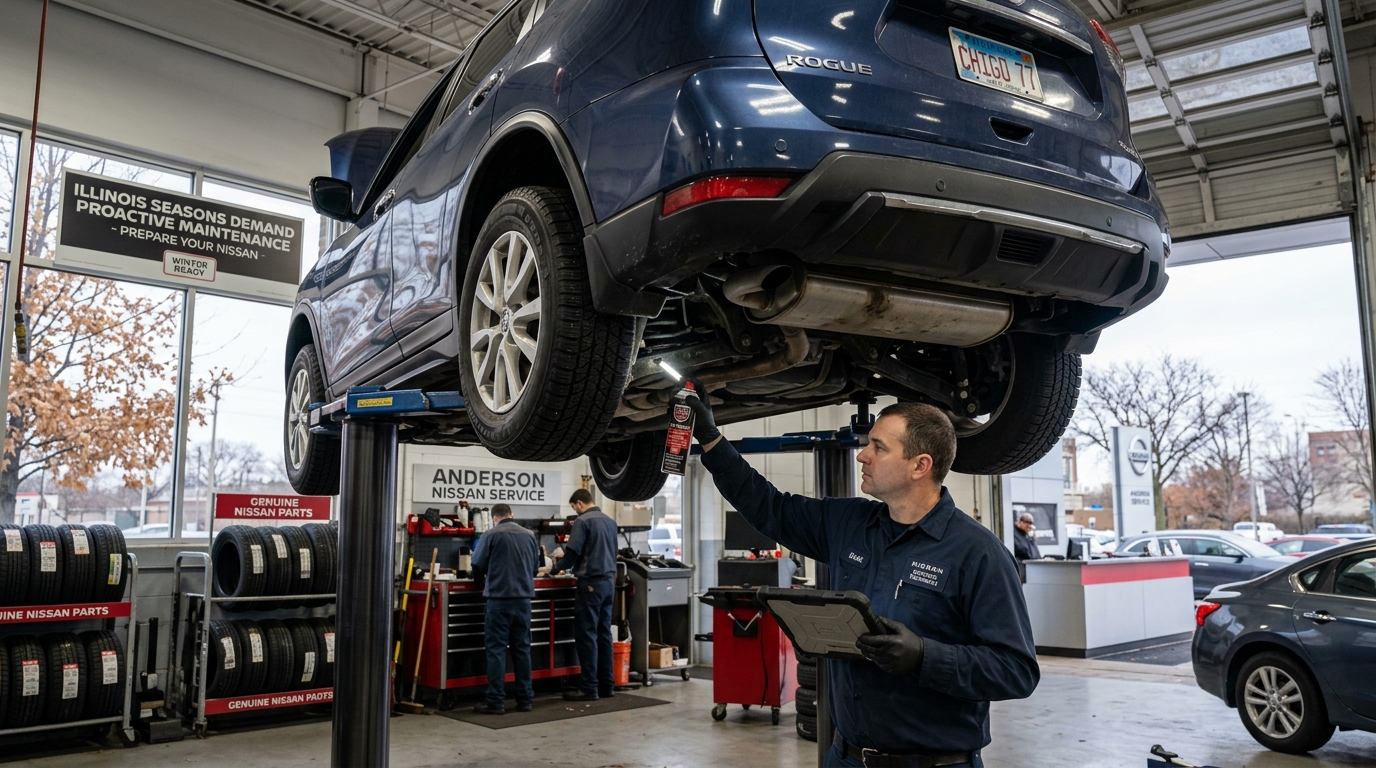
The climate in Illinois brings extreme temperature swings that place heavy physical stress on every mechanical system of your vehicle. From scorching summer humidity to prolonged sub-freezing winter temperatures, the components under the hood must work harder to maintain peak performance. Proactive seasonal maintenance is the most effective way to prevent minor wear from turning into an unexpected, costly breakdown.
For drivers commuting past the Des Plaines River or navigating major highways like I-294, Chicago winters demand absolute vehicle reliability. Cold weather thickens engine oil, slows down battery chemical reactions, and hardens tire rubber, which significantly reduces traction. Conversely, summer heat accelerates fluid breakdown and places immense strain on the cooling system. Preparing your vehicle for these shifts ensures that safety systems and mechanical parts perform exactly as designed.
Our expert technicians understand how these seasonal changes affect different models. Whether you drive a crossover equipped with intelligent all-wheel drive and a turbocharged 1.5L engine or a larger SUV with a robust 3.5L V6, regular upkeep preserves the integrity of your drivetrain. To learn more about how specific vehicles handle our local climate, you can explore the best Nissan models for local driving conditions. If you need to schedule an inspection, contact our service department at 3456 N Kedzie Ave, Chicago, IL 60618 or speak directly with an advisor by calling (872) 278-7632.
Table of Contents
- The Best Time to Schedule Winter Maintenance
- Crucial Fluids to Check Before and After Winter Driving
- Is Underbody Rust Proofing Worth the Cost on Salted Roads
- Smart Strategies to Budget and Plan for Automotive Care
- Answers to Your Seasonal Maintenance Questions
- Keep Your Nissan Performing Safely at Berman Nissan
The Best Time to Schedule Winter Maintenance
Timing your winter service visit is crucial to avoiding the seasonal rush that occurs immediately after the first major snowfall. Scheduling your winter maintenance during late October or early November ensures your vehicle is fully prepared before freezing temperatures arrive. This proactive window allows technicians to identify and resolve minor issues, such as a weakening battery or worn wiper blades, before they cause a roadside emergency.
For families driving past the Pickwick Theatre or commuting daily from Park Ridge suburban neighborhoods, traction and electrical reliability are paramount. Cold weather causes tire pressure to drop by approximately 1 psi for every 10°F decrease in ambient temperature, making regular pressure checks vital. Additionally, winter tires require a minimum tread depth of 6/32 inch to safely channel slush and snow; driving on tires near the legal minimum of 2/32 inch dramatically increases stopping distances.
Our service team is dedicated to keeping local drivers safe throughout the year. You can visit our homepage to explore our full range of automotive care resources and learn about our local community initiatives. To help keep your seasonal maintenance affordable, be sure to check our current service incentives and specials before booking your appointment. Taking these steps early ensures your all-wheel drive system, battery, and tires are ready to face the elements.
Crucial Fluids to Check Before and After Winter Driving
Fluids are the lifeblood of your vehicle, and their properties change significantly when exposed to temperature extremes. Before the winter freeze sets in, verifying that your engine oil, coolant, and windshield washer fluid are optimized for low temperatures is essential. After months of driving through snow, slush, and road salt, a secondary post-winter inspection of your brake fluid and transmission fluid ensures no moisture or contaminants have compromised these vital systems.
When drivers bring their vehicles in, our service advisors often show them how freezing temperatures can thicken motor oil, which is why we recommend checking the oil's viscosity before the first major cold snap. Using the manufacturer-recommended oil weight ensures rapid lubrication during cold starts, protecting internal components from friction. Similarly, the engine cooling system requires a proper 50/50 mix of antifreeze and water to prevent the coolant from freezing and cracking the engine block.
Windshield washer fluid also requires immediate seasonal attention. Switching to a winter-grade formula rated for sub-zero temperatures prevents the fluid from freezing in the reservoir or on the windshield. Once spring arrives, inspecting the brake fluid is highly recommended, as moisture can accumulate in the hydraulic lines during rapid temperature cycles, leading to a spongy pedal feel. Our certified technicians can also inspect the fluid levels in your 9-speed automatic or Xtronic CVT to ensure smooth gear transitions. To learn more about our commitment to quality service, you can read our dealership's background or contact our service team directly to plan your next fluid inspection.
Is Underbody Rust Proofing Worth the Cost on Salted Roads
Road salt and liquid de-icing chemical mixtures are highly effective at melting ice, but they are incredibly corrosive to your vehicle's undercarriage. Over time, salt accumulation leads to rust on frame rails, suspension mounting points, rocker panels, and brake lines. Professional underbody rust proofing, which typically costs between $150 and $500, provides a protective barrier that seals metal surfaces against moisture and corrosive agents.
For owners who plan to drive their vehicle for more than five years, this protective coating is a highly worthwhile investment that preserves structural integrity and resale value. This protection is especially relevant for rugged, trail-ready trims like the Rock Creek or premium trims like the Platinum, where protecting the suspension and chassis components is key to long-term performance. Regular undercarriage washes during the winter also help rinse away salt before it can bond to metal surfaces.
Electric vehicle owners must pay close attention to underbody cleanliness. During the coldest winter days, electric vehicles can experience a temporary range loss of between 15% and 30%, making overall system efficiency critical. Road salt and grime accumulation on the underbody can compromise sensitive electrical connectors and battery casings if left unaddressed. To see how other local drivers protect their vehicles, you can read our customer reviews, or you can visit our electric vehicle center to learn more about specialized maintenance for electric powertrains.
Smart Strategies to Budget and Plan for Automotive Care
Maintaining a vehicle does not have to involve unexpected financial surprises. By establishing a dedicated monthly maintenance fund of $50 to $150, depending on your vehicle's age and mileage, you can comfortably cover routine seasonal services. This proactive budgeting approach ensures that tire swaps, fluid flushes, and brake inspections are treated as planned expenses rather than sudden financial burdens.
Combining seasonal tasks into a single service visit is another excellent way to optimize your maintenance budget. For example, scheduling an engine oil change, tire rotation, and battery load-test at the same time minimizes labor costs and reduces the time your vehicle spends in the shop. Regular multi-point inspections also allow technicians to identify minor issues—such as a slightly worn belt or a small fluid seep—long before they escalate into major, expensive repairs.
Staying informed about recommended service intervals is easy when you utilize our digital resources. You can connect with us on social media to receive timely maintenance tips, service reminders, and seasonal updates directly in your feed. When you are ready to bring your vehicle in for a professional check-up, you can get directions to our service center to find the most convenient route to our facility. Keeping up with these scheduled visits also helps protect your vehicle's 5-year/60,000-mile powertrain warranty coverage.
Answers to Your Seasonal Maintenance Questions
Q: What cold cranking amps rating is recommended for a car battery in local winters?
A battery with a rating of at least 600 to 800 Cold Cranking Amps (CCA) is highly recommended to ensure reliable starting during sub-zero winter mornings. Extreme cold significantly reduces a battery's chemical output while requiring more power to turn over an engine with thickened oil, making a strong CCA rating essential.
Q: How does leasing versus owning a vehicle affect my responsibility for seasonal maintenance?
Both leased and owned vehicles require strict adherence to the manufacturer's recommended maintenance schedule to preserve safety, reliability, and warranty coverage. To understand how ownership structures affect your long-term vehicle care planning, you can compare buying versus leasing options on our site.
Q: What are the warning signs that my car battery is about to fail in cold weather?
Common warning signs of a failing battery include a noticeably slow engine crank when starting, dimming headlights while idling, or a clicking sound when you turn the key. If you notice any of these symptoms, we recommend having the battery load-tested immediately to avoid being stranded.
Q: How do I maintain the advanced safety sensors and cameras on my vehicle during winter?
You should regularly clear all snow, ice, and road salt buildup from the windshield, grille, and bumper areas where safety sensors are located to ensure optimal function. Keeping these surfaces clean ensures that advanced driver-assist technologies like ProPILOT Assist and blind spot monitoring function accurately. To explore the safety suites available on our latest vehicles, you can read our model year guide.
Q: Why does my tire pressure warning light turn on during the first cold day of autumn?
Tire pressure drops by approximately 1 psi for every 10°F decrease in temperature because cold air contracts. This drop can trigger your tire pressure monitoring system, which is why you should check and adjust your tire pressure monthly to match the specifications on your vehicle's door-jamb placard.
Keep Your Nissan Performing Safely at Berman Nissan
Maintaining a regular seasonal service schedule is the single most effective way to ensure your vehicle remains safe, efficient, and reliable through every seasonal shift. Our factory-trained technicians utilize specialized diagnostic tools and genuine OEM parts to keep your vehicle performing at its absolute best. By staying ahead of routine maintenance, you protect your investment and enjoy peace of mind on every commute.
For unexpected situations on the road, you can rely on the comprehensive coverage provided by the manufacturer. The official roadside program offers manufacturer-backed service quality, brand-specific expertise, and transport to authorized service centers using genuine parts. This coverage is included with your vehicle's 3-year/36,000-mile bumper-to-bumper warranty, ensuring you are never left without support. If you experience a flat tire, dead battery, or mechanical issue, you can contact Nissan Roadside Assistance: 1-800-225-2476 for immediate, professional coordination.
Our team is here to assist you with all of your maintenance, repair, and parts coordination needs. To experience our transparent pricing and dedicated customer care, you can discover the Berman advantage today. When you are ready to schedule your next seasonal inspection or fluid top-off, we invite you to stop by our service department at 3456 N Kedzie Ave, Chicago, IL 60618 or get in touch by calling our team at (872) 278-7632.